What advantages does 5-axis machining provide over traditional CNC machining?
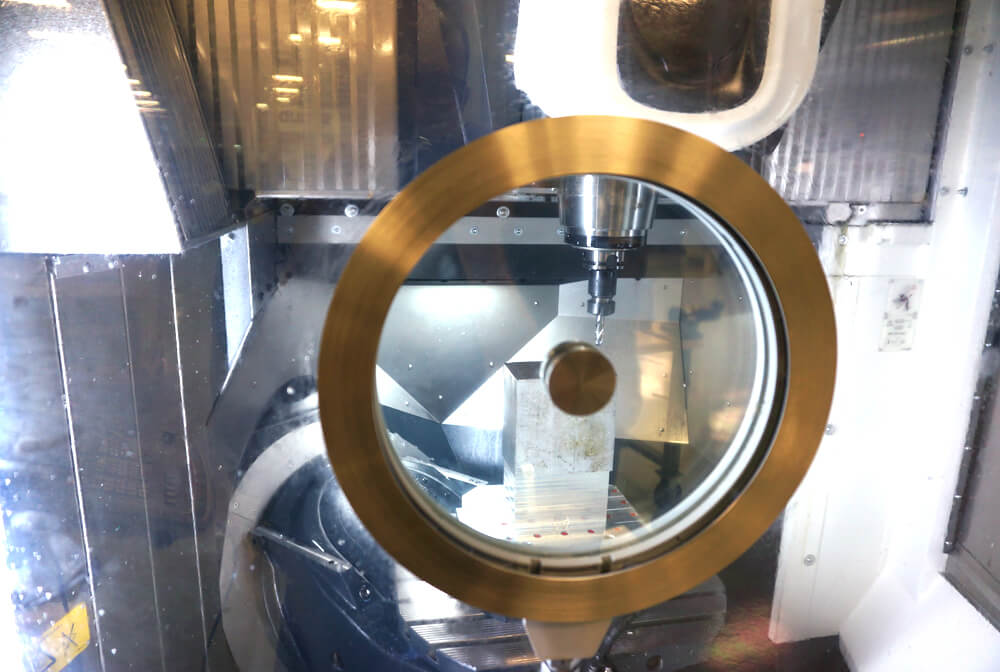
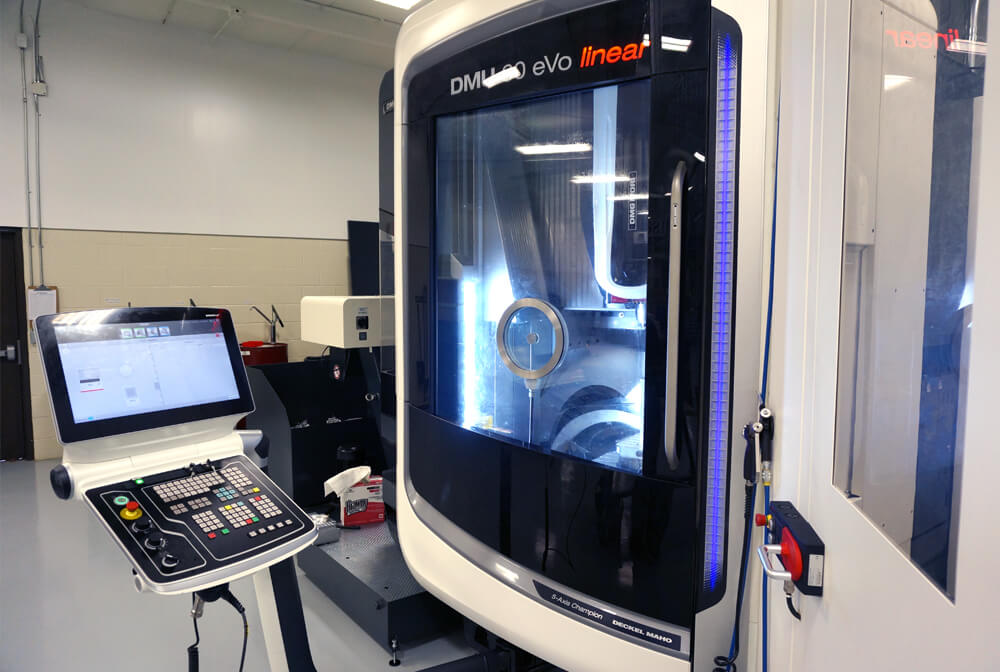
5-axis machining allows cutting tools to approach a component from multiple angles in a single setup, enabling complex geometries, tighter tolerances, and improved surface finishes. This reduces repositioning, shortens cycle times, and improves overall production accuracy.
Why is 5-axis machining ideal for complex precision components?
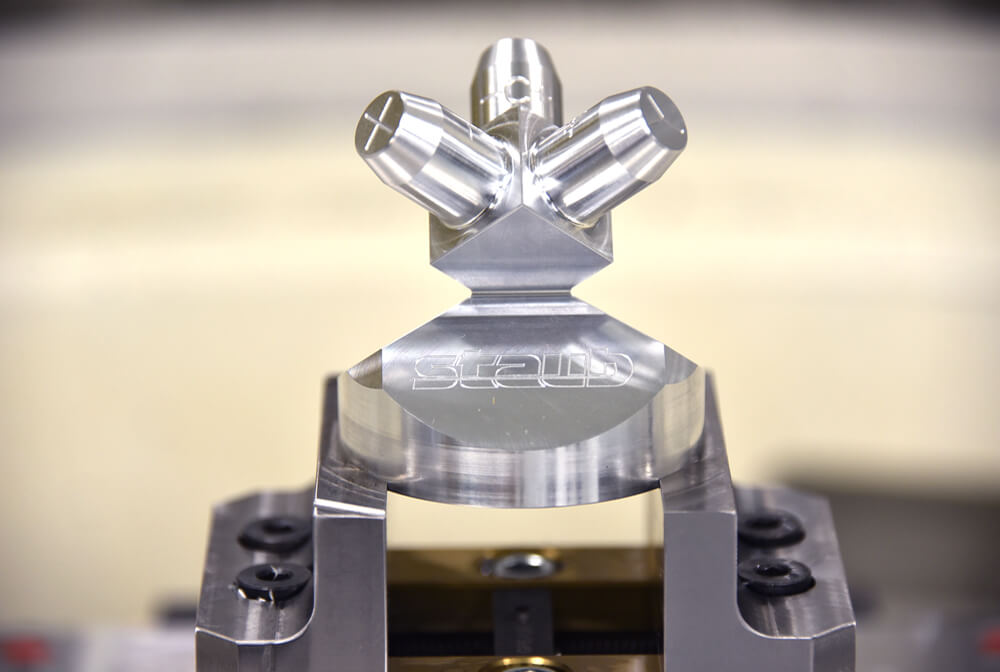
Simultaneous multi-axis motion enables machining of contoured surfaces, compound angles, and intricate features that would require multiple operations on traditional equipment. This capability supports demanding applications in aerospace, medical, defense, and advanced industrial manufacturing.
How does Staub use automation in its 5-axis machining cells?
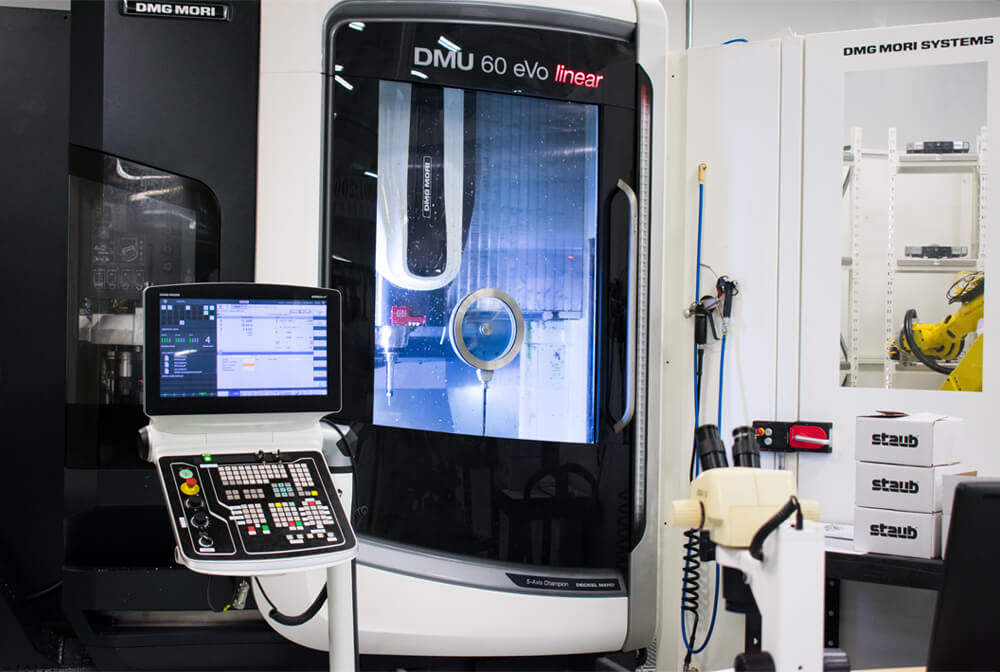
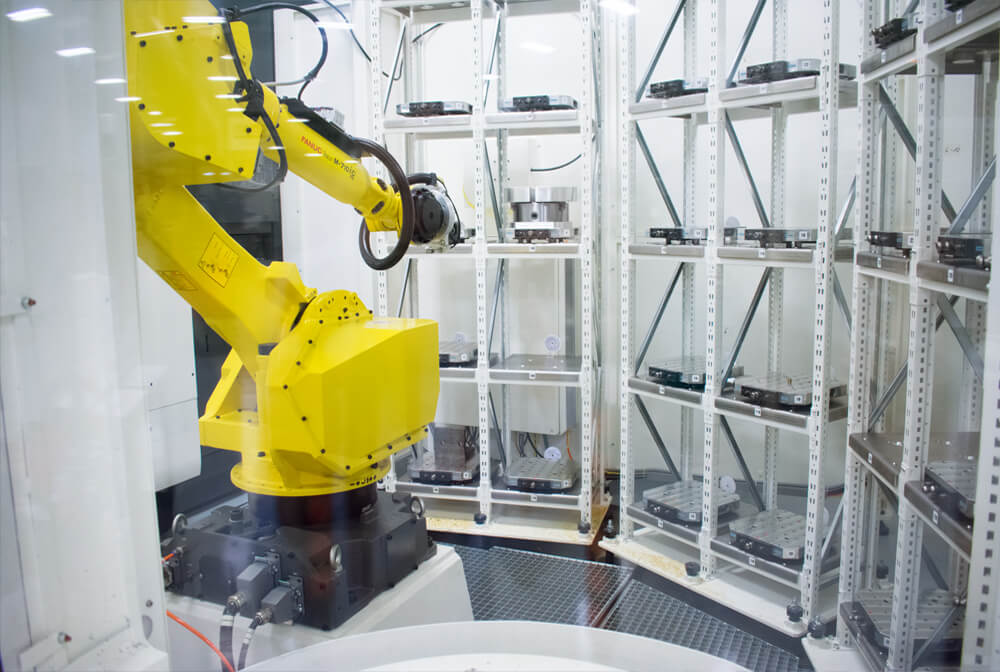
Staub integrates robotic pallet handling, in-process probing, tool life monitoring, and automated measurement systems within its 5-axis machining cells. These systems enable unattended or lights-out production while maintaining consistent machining accuracy.
Can 5-axis machining reduce lead times and production costs?
Yes. By machining complex parts in fewer setups, 5-axis technology minimizes manual handling, reduces fixturing requirements, and decreases opportunities for error. The result is faster throughput, improved repeatability, and lower total manufacturing cost.
How does 5-axis machining fit within Staub’s production manufacturing approach?
Staub designs its 5-axis operations for long-run, recurring production rather than one-off machining. Integrated automation allows flexible scheduling, just-in-time delivery, and scalable manufacturing aligned with customer demand forecasts.