

Aerospace CNC Machining Processes
The aerospace industry depends on CNC machining methods to assemble all aircraft, from lighter single turboprop airplanes to jetliners and from helicopters to spacecraft. Aircraft parts include bushings, clamps, hinges, and other customized components, all needing to function properly together. These parts are often made from aluminum due to their lighter weight, though many may include materials like bronze, copper, stainless steel, and titanium, as well as engineered materials like advanced composites.
Aircraft part materials and processes made via aerospace CNC machining include:
- Aileron housings: This component is often made from solid aluminum rods for aerospace applications. It houses the parts that control aircraft flaps, and it is often made with 5-axis CNC milling machines.
- Battery cores: Often made from anodized aluminum using Swiss CNC turning machines, battery cores for aircraft contain heavy metals and toxic chemicals that the core must contain to keep from leaking contaminants.
- Check valves: Check valves control the flow of brake fluid in aircraft. They are often manufactured from stainless steel using CNC turning machines.
- Control valve housings: Made from aluminum according to military specifications, these aircraft brake components are often machined using 4-axis CNC milling machines.
- Machined reflectors: Made from milled and polished aluminum, reflectors are part of an aircraft’s wing lighting system. They can be shaped with great precision using 5-axis CNC milling methods.
- Pistons: Due to their lighter weight, pistons are typically made from aluminum alloys. However, pistons can be made with conventional CNC turning techniques for aircraft engine valves.
- Support assemblies: 5-axis CNC milling processes are typically used for these aircraft support assemblies, often made from aluminum tubing.
- Swivel brackets: These swivel brackets are usually made from aluminum and are made using 4-axis CNC milling. They are a three-piece assembly.
- Valve seats: With diameters that often need to be within a 0.0005 inch (12.7 micron) tolerance, these tend to be made from stainless steel using mill/turn CNC machining.
With the millions of components that make up a modern aircraft, it’s no wonder that precision machining is so essential for aerospace components. CNC machining is and will remain a vital manufacturing process for the foreseeable future.
Parts for Aerospace: CNC Machining of Complex Geometries Along 5 Axes
Aircraft continue to evolve while their parts become increasingly complex and correspondingly pricier. For this reason, airframes a decade or older are often retrofitted with new technology, creating a need for precision parts with tight tolerances, for which aerospace CNC machining is usually the most cost-effective fabrication method. As the examples of components listed earlier show, many are made via 5-axis CNC machining, which simultaneously moves cutting tools along programmed paths in 5 axes to produce parts with great accuracy.
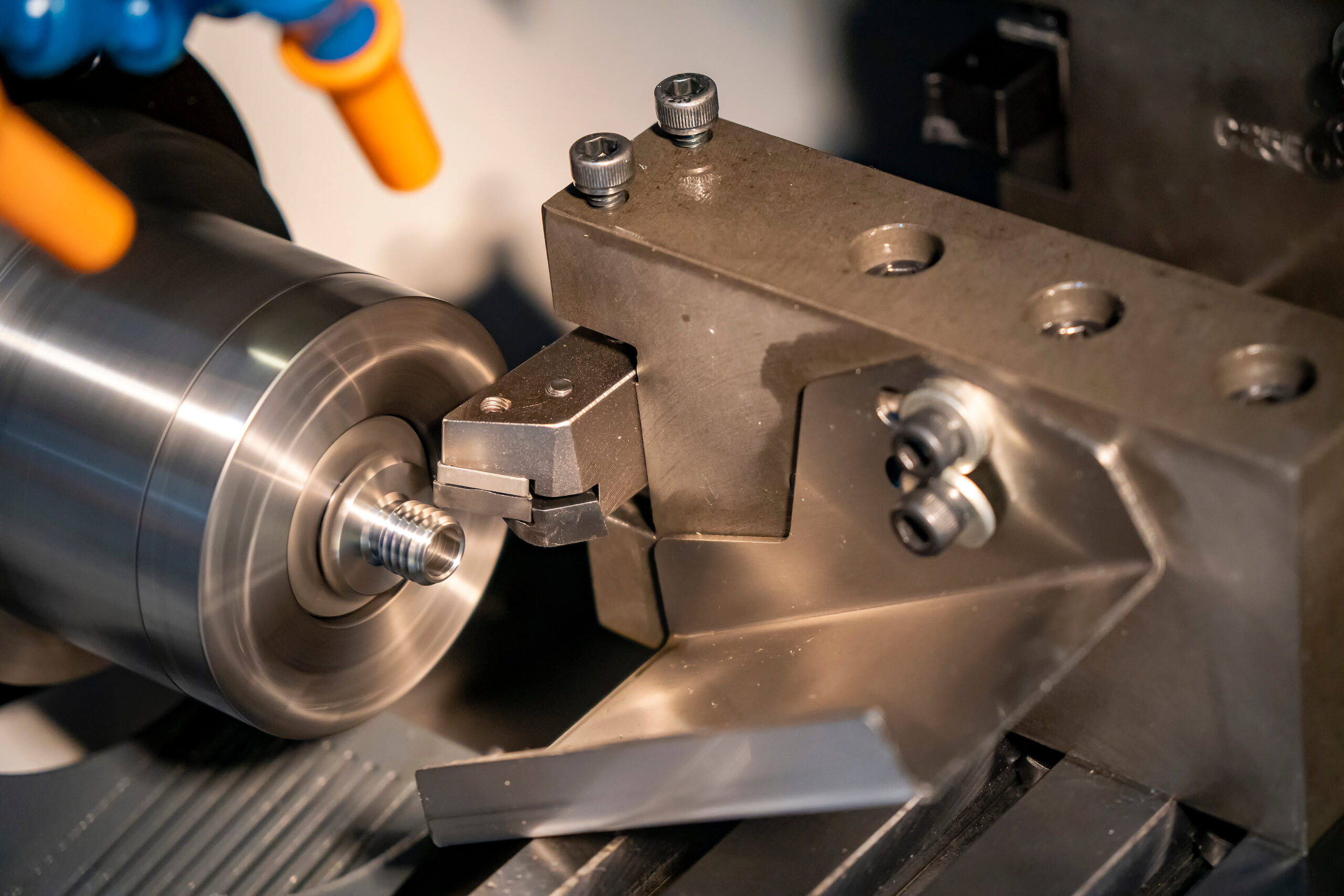
The significant number of replacement parts needed for all the world’s aircraft has made 5-axis capabilities a must for any company manufacturing aerospace hardware. CNC machining involves turning, tapping, milling, engraving, drilling, and contouring along pre-programmed paths to produce parts accurately. These techniques are used not only to make new aircraft parts but also to tailor, recondition, reconfigure, and otherwise adapt aircraft components to newer and more stringent standards.
There’s a simple reason why complexity has increased for components made for aerospace. CNC machining can produce quality parts with hollowed-out or other complex geometries that reduce an aircraft’s weight without sacrificing performance. While this is, in part, a success driven by improved tooling, different hardware, and advanced automation, aerospace CNC machining processes rely on sophisticated software. Design, inspection, simulations, workflow, and other software augment the hardware used for CNC machining processes.
Achieving Tight Tolerances with Aerospace CNC Machining
Making the components used in aerospace requires a higher level of precision than that for other industries. CNC machining offers a means to consistently produce highly tight tolerances, lowering the risk that these parts will fail while an aircraft is in flight. There’s little room for error in the industry, as an imperfect or otherwise faulty part can result in the loss of millions of dollars, not to mention the risk of injury or death to those aboard.
This is why standards are so strict for companies fabricating aircraft components. The accuracy of aerospace CNC machining almost eliminates the chance of substandard parts making their way into an aircraft. Additionally, although unable to mass-produce parts at the scale of techniques like injection molding, CNC methods offer a sufficiently quick means for mass production to more than meet industry demand while meeting the tight tolerances for stringent aerospace specifications.
While CNC technology is integral in developing new and replacement aircraft parts, it also plays a crucial role in aerospace research and development. CNC machining allows for the rapid production of prototypes, while the software behind the technology will enable designs to be easily tweaked if necessary. Developments in both hardware and software have additionally enhanced quality control in the aerospace sector.
Quality Control in Aerospace CNC Machining
While air flight is considered the safest means of transportation in the modern world, accidents or incidents can happen when something significant goes wrong. For this reason, every component that goes into an aircraft needs to meet the highest quality standards. Controlling processes to prevent errors, aerospace CNC machining includes safety protocols and rigorous testing of parts for defects and flaws to avoid calamity.
The aerospace industry has the highest quality standards of any sector to ensure that only flawless parts are installed in an aircraft. Stringent testing methods are used on everything from an aircraft’s exterior to its internal engine components. These quality control measures often need to work in conjunction with automated manufacturing methods.
Quality control methods aerospace CNC machining companies use include:
- Computer vision systems
- Coordinate measuring machines (CMMs)
- Customized measurement software
- In-process inspection stations
- Inspection and statistical process control (SPC) analysis
- Laser scanning
- Statistical process control (SPC) analysis
These advanced quality control techniques certify the accurate measurement of parts for aerospace. CNC machining companies need to maintain their systems to ensure they operate optimally. Proper and regular maintenance activities like calibrating equipment, regular cleaning, and routine inspections safeguard the accuracy of components.
Performance Standards & Certification Requirements for Precision Aerospace Parts
As it’s vital for manufacturing aircraft components, aerospace CNC machining companies must have stringent standards to control quality. Two fundamental standards govern the aerospace industry: AS9100 and ISO 9001. While AS9100 certification is specific to aerospace, CNC machining operations can also be governed according to ISO 9001. As the International Organization for Standardization put out, ISO 9001 is a quality management system that focuses on continuously improving customer service.
Its most recent iteration is the ISO 9001:2015 standard, which seeks to support:
- Resolving complaints: Offering guidance to resolve complaints effectively, ISO focuses on solving problems promptly.
- Improving processes: The standard helps businesses find ways to lower costs and produce better outcomes by streamlining operations to increase efficiency and reduce waste.
- Customer confidence: The standard seeks to increase customer satisfaction and trust in a business by implementing robust quality assurance processes.
- Continuous optimization: With audits and reviews of companies with ISO 9001 certification, the standard helps businesses refine quality management systems to maintain competitiveness.
Specifically designed for aerospace, CNC machining companies that work on aircraft-related projects benefit from the recognition AS9100 certification brings. Developed by the International Aerospace Quality Group (IAQG) and based on ISO 9001 protocols, AS9100 certification helps aircraft manufacturing businesses comply with industry standards and international regulatory requirements. Those looking for a supplier of aircraft components will be more likely to do business with a company that’s AS9100-certified.
Staub Advantage in Aerospace CNC Machining
Staub Precision Machining Inc. has considerable experience manufacturing parts for aerospace applications. CNC machining of components for both civilian and military aircraft is in Staub’s wheelhouse. Making the precision parts necessary for these machines to fly reliably and efficiently requires close collaboration with our customers. To aid this, we work closely in the design phase and during production to ensure tolerances are within our customers’ specifications. Additionally, Staub has certifications under the AS9100 and ISO 9001 standards to provide the highest quality aerospace CNC machining. Contact Staub’s expert team today to learn more about our aerospace CNC machining and other capabilities.
Last updated on June 9th, 2025 at 02:38 pm