

Few tools have redefined modern metalworking so profoundly as the Computer Numerical Control (CNC) system. This technology has become the cornerstone of precision work at machine shops, enhancing accuracy and efficiency while producing superior quality. Advanced CNC precision metalworking now accounts for a significant portion of work in many industries that rely on the exactness inherent in this technology.
The Role of CNC Technology in Modern Metalworking
As industrial technology has advanced, CNC precision metalworking has largely replaced manual processes with automated systems that provide greater consistency and accuracy. Modern CNC milling and turning machines are designed to handle components with complex geometries and tight tolerances, reliably and quickly delivering finished workpieces with every production run. Cutting-edge CNC technology has become essential for industries where precision is essential, such as in the aerospace, auto, defense, and medical sectors. The use of advanced precision metalworking helps machine shops fulfill high-volume orders, while also ensuring the exactness that manual machining processes cannot readily provide.
CNC Milling Pushes the Boundaries of Precision
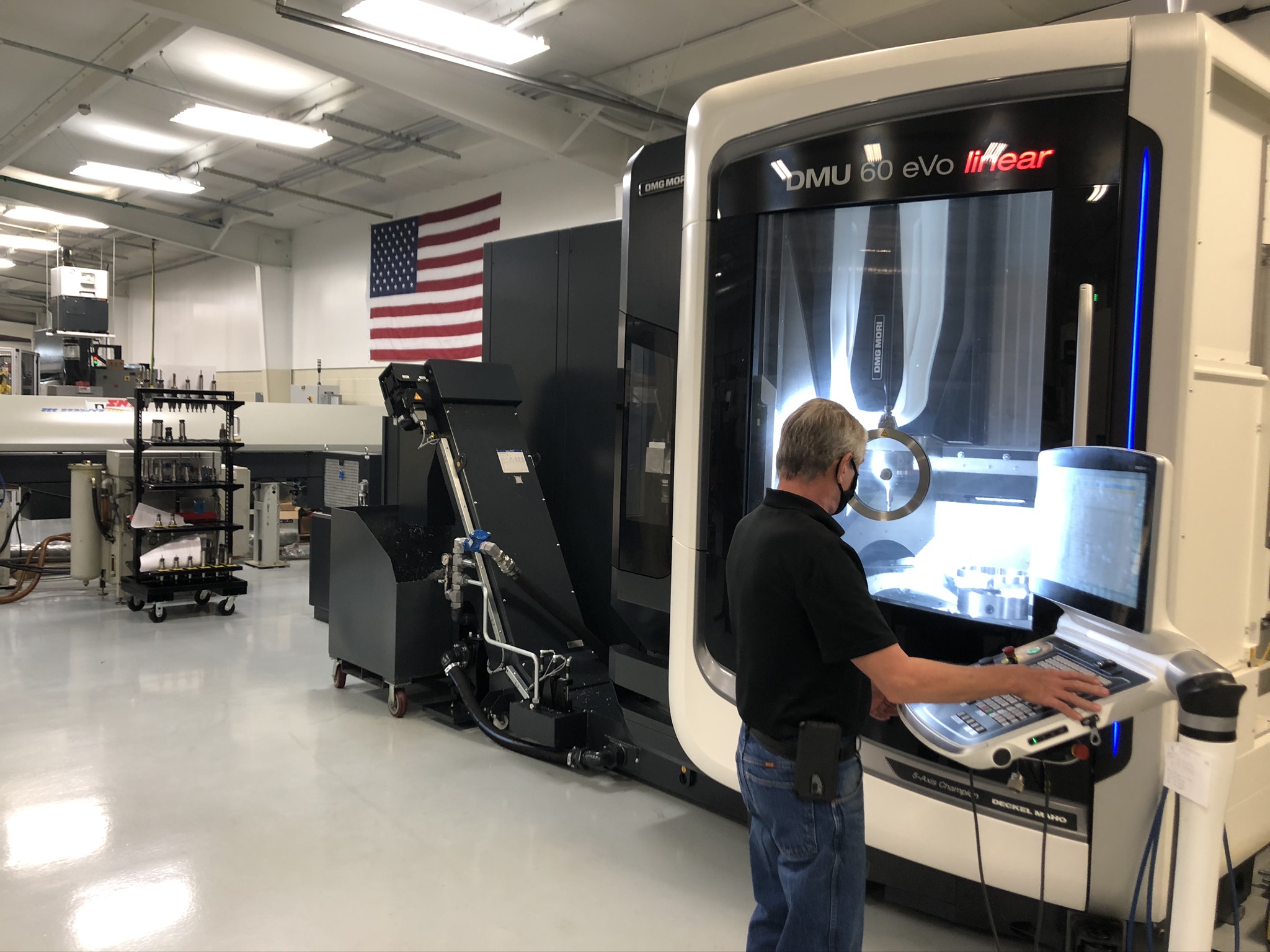
Since the initial development of numerical control systems in the late 1940s, and the computerization of this manufacturing technology in the 1970s, multi-axis milling has significantly advanced. CNC precision metalworking today requires machines that can perform on multiple axes to achieve tight tolerances and complex contours, which conventional methods would find difficult or even impossible. Such advanced control systems enable repeatable processes down to the micron level, with multi-axis milling equipment capable of producing flawless finishes and intricate geometries.
CNC Turning Results in Superior Operational Efficiency
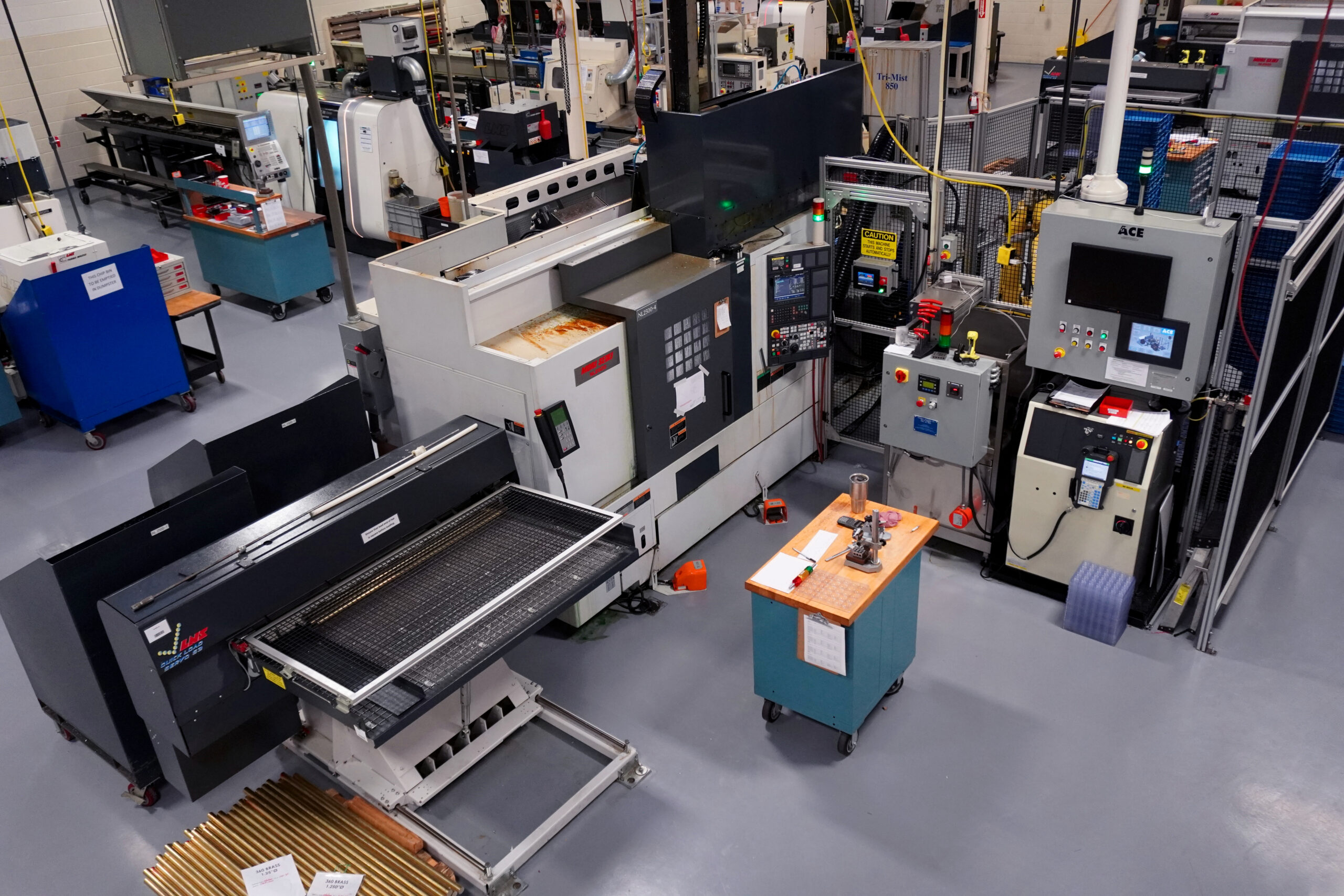
CNC turning processes focus on cylindrical and rotating components, complementing modern milling methods. Advanced CNC precision metalworking relies on these turning processes to produce threaded, grooved, and other intricate features to produce high-quality parts quickly. High-volume production relies on the efficiency of CNC turning equipment, which optimizes cycle time and minimizes tool wear to deliver consistent quality. Advanced turning techniques reduce lead times and manufacturing costs, while also delivering precision parts on tight delivery schedules without compromising quality.
Meeting Diverse Requirements with Advanced CNC Precision Metalworking
The combination of CNC milling and turning allows machine shops to tailor their approach to producing precision parts by varying their processes to meet the needs of customers. This allows advanced CNC precision metalworking methods to meet diverse specifications, from single prototypes to large-scale production runs, and from simple parts to highly complex assemblies. Additionally, modern CNC equipment is adaptable enough to handle a range of alloys, including aluminum, copper, titanium, and other metals.
How Staub Pairs Precision Engineering with Innovation
Staub Precision Machine has continually invested in cutting-edge CNC technology, becoming a machine shop that’s become known regionally as one of the most advanced. CNC precision metalworking in our shop now incorporates real-time monitoring systems to ensure consistently exceptional results. Our company also integrates CAD and CAM software, which allows us to develop manufacturing processes that support seamless manufacturability from the design phase through final finishing work.
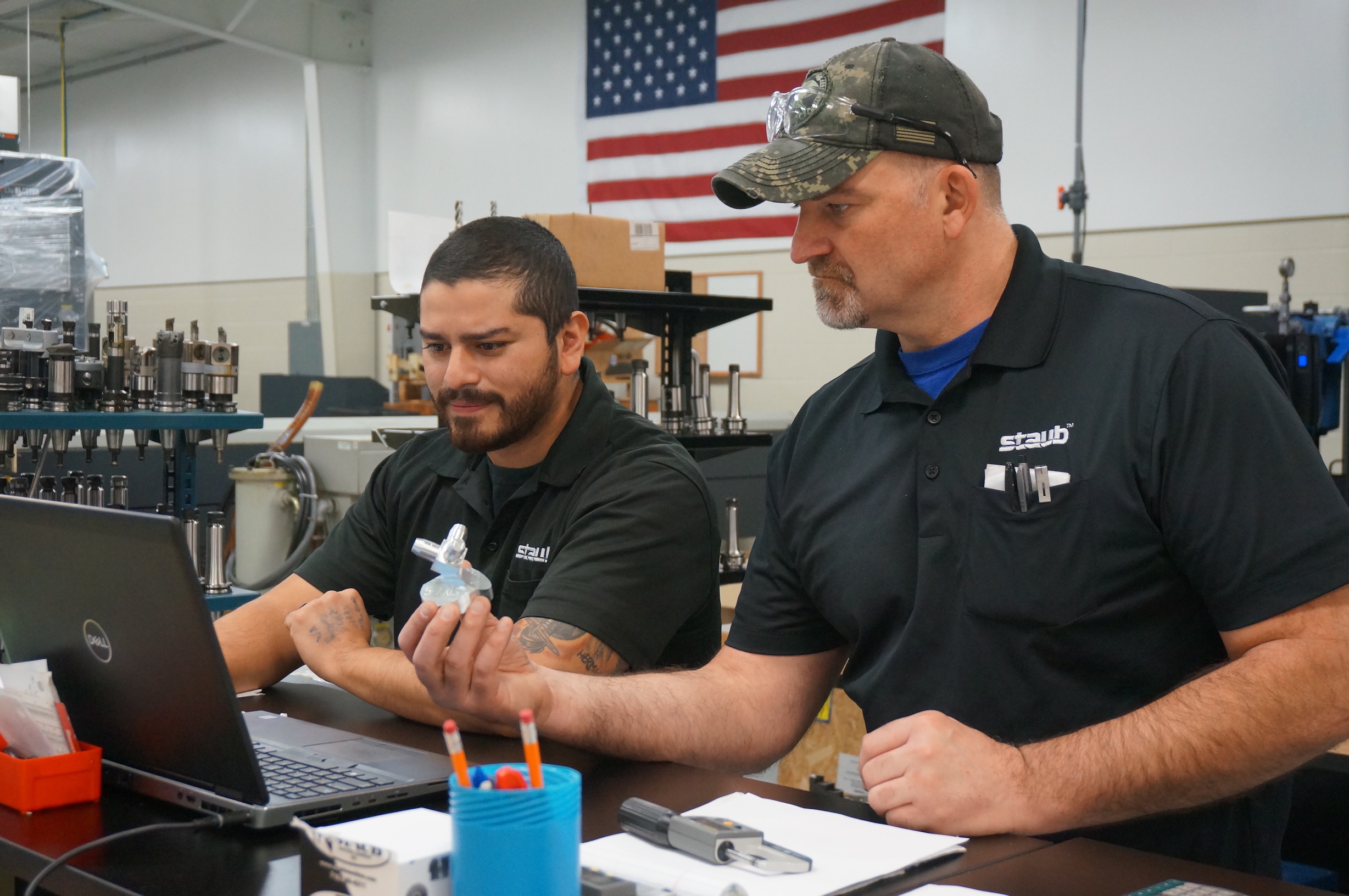
However, Staub’s commitment to quality goes beyond the technology we use. Behind our advanced CNC precision metalworking is our commitment to hiring and retaining skilled engineers and machinists who understand the nuances of CNC technology. Staub understands that no machine shop, regardless of its level of automation, can operate effectively without human expertise, which, when combined with cutting-edge CNC technology, yields an impeccable finished product.
Staub Case Study
Our capabilities are evident in how Staub addresses challenges. For example, a customer in the medical industry approached us when sales for one category of their products increased rapidly over a short period. It required significant agility to scale their production quickly to meet demand, which their existing supply chain couldn’t react quickly enough to satisfy. Additionally, the company’s upper management requested a reduction in the production cost per part.
Our Solution
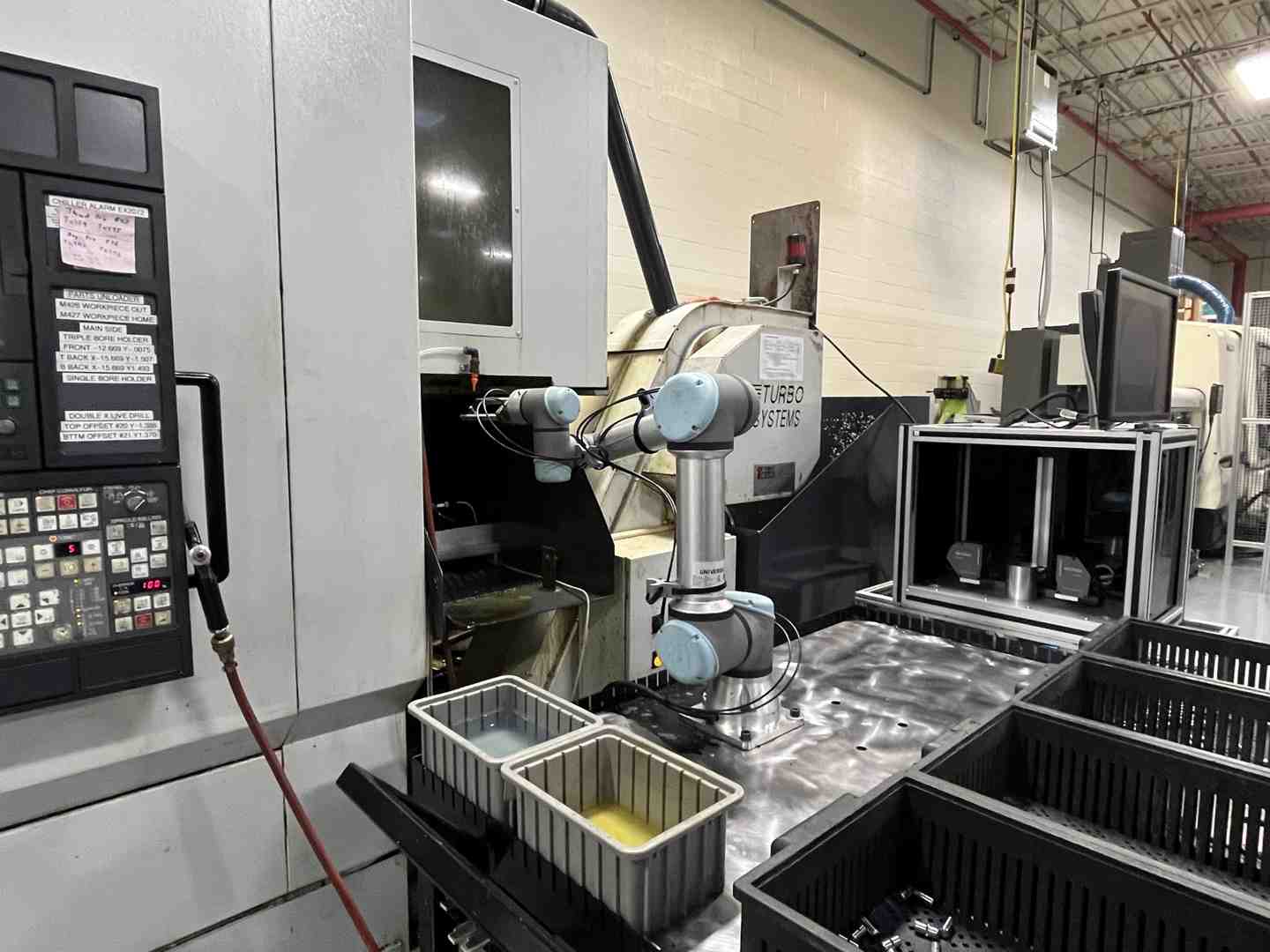
When Staub engineers looked at the customer’s part, they suggested eliminating the forging process it used. Instead, they suggested machining it with our DMU-60 5-axis mill, pairing it with a robotic loading cell. After redesigning the part for optimum manufacturability, we demonstrated to the customer how the efficiency of our 5-axis machining process negated the advantages the forging route offered them. Staub was able to meet their demand in eight weeks, while adjusting to increased demand in just four weeks later in the year.
Results
The simplified supply chain, along with Staub’s automated processes, helped our customer fulfill a crucial order, enabling them to meet demand. Additionally, they reported better part quality, decreased costs, and an overall increase in profits.
The Staub Advantage: Driving Progress Through Precision
Staub delivers cutting-edge solutions that define the future of advanced CNC precision metalworking. By blending state-of-the-art automation with the expertise of our skilled engineers, we ensure innovation and excellence in every project. Discover more about our capabilities and what sets us apart.
Last updated on December 18th, 2025 at 01:13 pm