

The quick pace of modern manufacturing requires that precision machining facilities achieve greater efficiency and precision. From the aerospace sector to makers of medical devices, industries are increasingly demanding complex components with tighter tolerances. To support advanced machining technologies like 5-axis milling, a high degree of automation must be utilized to achieve a level of precision and complexity not attainable through either means. The introduction of 5-axis milling techniques has revolutionized production by automating workflows and boosting performance to new levels.
Understanding How 5-Axis Milling Works
Less sophisticated CNC technology, like 3-axis mills, operates on the X, Y, and Z axes. At the same time, 5-axis milling incorporates two additional rotational axes, usually known as A and B or B and C. These two additional rotational axes allow cutting tools to approach workpieces from just about any direction. This capability enables operators to machine complex geometries with minimal downtime, and sometimes in a single setup. With milling machines that operate on fewer axes, precision machining will require repositioning the workpiece and using multiple tools to achieve the same results.
5-axis machining enables lights-out production, a manufacturing method that allows machines to run without immediate supervision. It transforms the machining process, allowing greater automation while increasing quality. For precision machine shops, 5-axis milling allows manufacturers to push the boundaries of what’s possible. Automated multi-axis machining also helps businesses reduce costs and machine more intricate workpieces, while making their operations more easily scalable and competitive.
Advantages of 5-Axis Machining
The main advantage of 5-axis milling is its ability to support automated processes. This alone gives these machines more versatility than machines that operate on fewer axes, and it’s what makes 5-axis milling a key machining technology for fully automated facilities. In fact, 5-axis machining supports a variety of capabilities, like automated tool changers and in-process metrology, along with software that uses real-time data to adjust tool paths.
The advantages of 5-axis milling include:
- Better skill utilization: As repetitive tasks, such as quality checks and part handling, are automated, skilled workers can focus on more complex tasks, like programming tool paths, optimizing processes, and innovating in other ways.
- Decreased labor costs: Automation naturally reduces the need for manual labor, thereby decreasing the need for human employees and lowering costs.
- Fewer errors: The automation of 5-axis milling systems eliminates most human error, producing consistent results across batches.
- Flexibility: The advanced software used for 5-axis milling allows operators to easily and quickly switch between projects with minimal downtime.
- Less waste: Not only can automation be used to speed production, but the precision of 5-axis milling machines reduces the amount of scrap produced, in turn lowering the need to rework workpieces.
- Lower cycle times: Automated equipment, such as robotic arms and pallet changers, minimizes the need for manual intervention, reducing downtime between batches and enabling lights-out production.
- Precision: The software, integrated with 5-axis milling machines, allows for self-correction in real-time, enabling automatic realignment of processes and correction for tool wear.
- Reduced setups: Even complex components can be machined in a single setup, dramatically cutting production time.
- Repeatability: The programmed movements of a 5-axis milling machine enable production of identical workpieces, whether manufacturing blades for optical components, orthopedic implants, wind turbine blades, or some other product.
- Scalability: From mass-produced products to the fabrication of a single unique prototype, 5-axis milling allows machine shops to scale their operations up and down quickly.
These advantages of 5-axis milling are what make it the future of smart machining.
The Future of Smart Machining
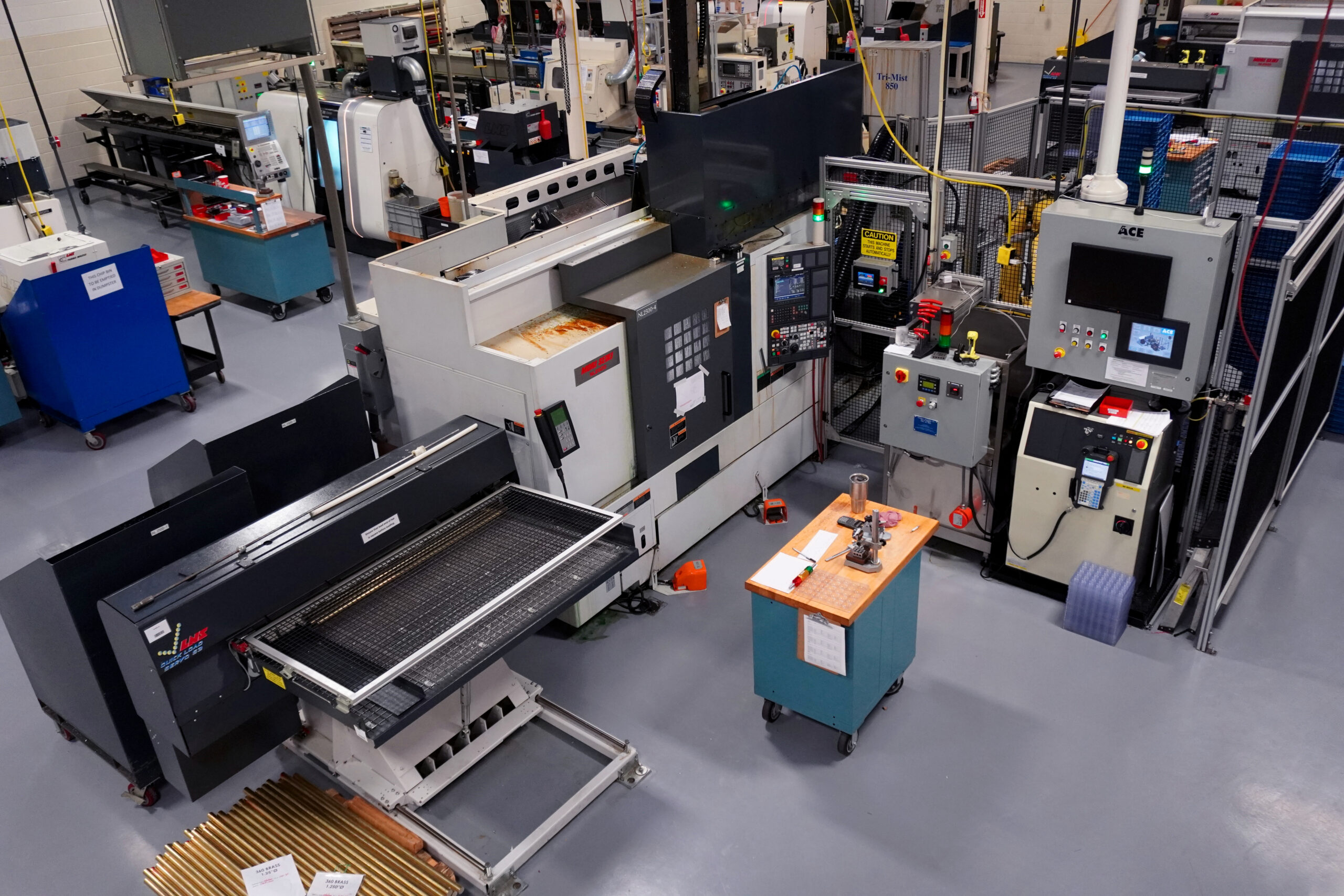
Known by phrases like Industry 4.0, the future of smart machining has arrived. The CNC techniques inherent to 5-axis milling machines are part of what makes intelligent manufacturing possible. 5-axis milling technology plays an integral role in this, supporting data-centric production on connected machine shop floors.
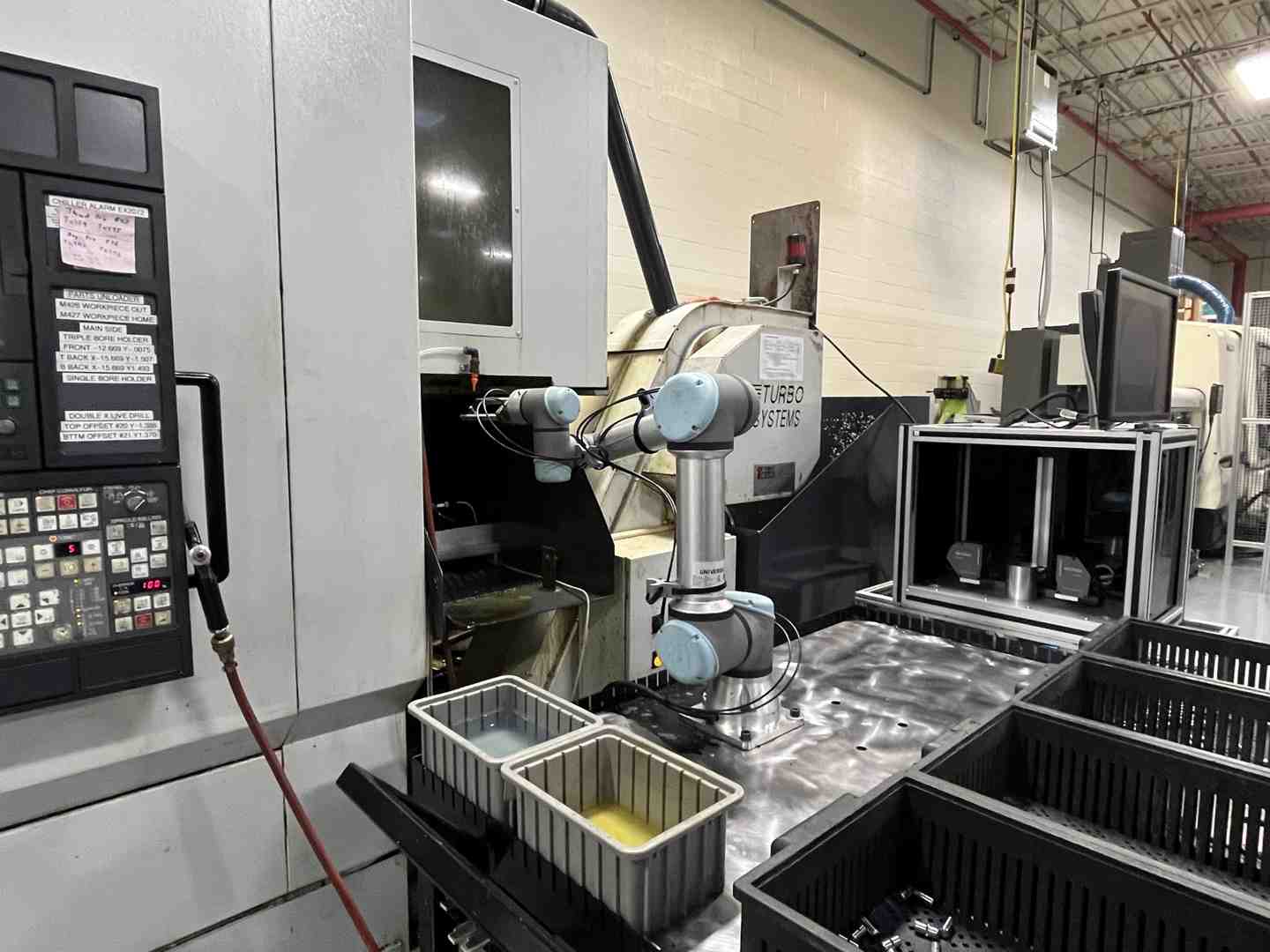
Playing a pivotal role in modern manufacturing, smart 5-axis milling systems utilize process probing to collect data from manufacturing processes, ensuring accuracy. They can also detect and manage wear to ensure a longer tooling lifespan. Smart systems also integrate automated subsystems, including autonomous robots that move workpieces, pallets, and fixtures between workstations.
5-axis milling allows machine shops to cut intricately shaped workpieces in just a single setup, each doing the work of 2-3 less sophisticated CNC milling machines as well as multiple skilled human workers per machine. Further, 5-axis milling machines do this work with greater precision and speed, enabling production of high-quality products more quickly.
These systems also enable predictive maintenance, allowing operators to perform maintenance tasks more efficiently. 5-axis milling techniques utilize IoT (Internet of Things) technology, which involves connected sensors linked to monitoring software that work in tandem to gather production data. In turn, cloud-based analytics programs collate this data to adjust production in real-time, thereby enhancing performance and optimizing processes.
Real-World Application: A Staub Precision Machine Case Study
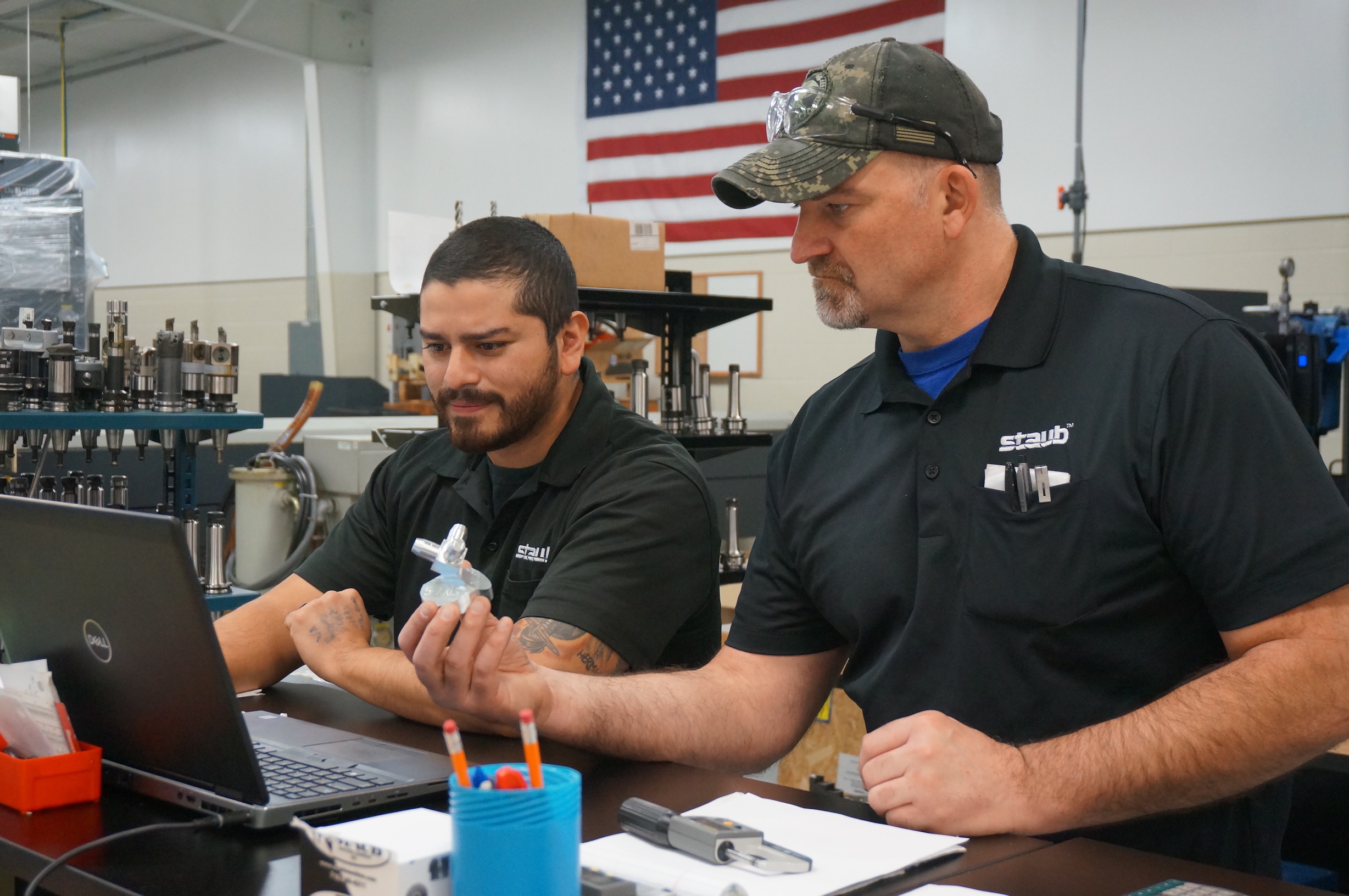
Staub Precision Machine has extensive expertise in 5-axis machining, which enables us to help our manufacturing partners produce their products more efficiently. One example of this can be seen in how we approached a medical client who was unexpectedly receiving many orders for 6061 aluminum manifolds. Their established suppliers couldn’t respond to this additional business quickly enough, so they asked Staub to step in to fill the gap.
Previously, this client had these manifolds forged rather than machined, though we knew that the efficiency and precision offered by our 5-axis milling machines could deliver a superior product more quickly. On top of this, the medical company’s upper management also demanded that the per part cost be reduced.
Our solution aimed to eliminate the forging operations, instead machining the component with our DMU-50 5-axis mill. Staub’s engineers also redesigned the part to more optimally machine it. This resulted in an increase in efficiency compared to the previous forging process. In fact, we reached the initial order of 250 parts per week after just eight weeks, and later in the year, we adjusted this upward again to produce 400 parts weekly after just four weeks.Staub Precision Machine continues to invest in advanced technologies to support our 5-axis milling and other automated machining. We constantly strive for greater efficiency and the highest quality in all our work. To learn more about how we can assist with your project, contact Staub today.