

A contract manufacturer partners with another business via a legal agreement under which production services are produced and delivered. For the hiring company, it often involves significant research when looking for a suitable partner to provide contract manufacturing. Opportunities that a contract manufacturer can offer go beyond cost savings and specialized expertise, though both should be major factors in this selection process.
Selecting the best contract manufacturer for a particular project takes careful consideration. Any agreement should spell out both companies’ obligations, though this agreement shouldn’t focus primarily on cost. The contract manufacturer’s capabilities are more critical to the hiring company, and should include considerations like capacity, equipment, experience with materials, and value-added services. Once a choice is made about the best partner for the job, it’s easier to take advantage of the contract manufacturing opportunities that are presented.
Contract Manufacturing: Opportunities to Improve Profitability
A company primarily partners with another company to fabricate products to increase production without significant capital investment. With contract manufacturing, opportunities abound to sell more goods and grow revenue without hiring more workers, investing in advanced technology, or purchasing more space to expand manufacturing. Many major manufacturers, including Apple, Boeing, General Motors, Microsoft, Nike, Tesla, and Unilever, take advantage of contract manufacturing opportunities.
However, smaller entities can also take advantage of contract manufacturing opportunities. To optimize design and development, expertise, lead time, resources, and other aspects of production, the right contract manufacturer will bring greater efficiency. Contract manufacturers often provide more cost-effective services, as both companies need to profit. For example, a good partner will work to make production more efficient in all areas under their control, from the design phase to delivery. With contract manufacturing, opportunities often come from substituting parts, managing supply chains, providing skilled labor, or other aspects of production.
Areas in which contract manufacturers bring benefits to production include:
- Capital investments: Many contract manufacturing opportunities result in significant savings on equipment, technology, and other capital investments, as the hiring company doesn’t need to invest in those aspects of production.
- Engineering expertise: In contract manufacturing, opportunities to collaborate with a partner with specialized experience and knowledge in certain areas often present themselves, allowing for more optimal production processes.
- Labor: The expense of hiring more workers is negated when working with a contract manufacturer, as they will already have an experienced and trained workforce.
- Procurement: Contract manufacturers tend to specialize, so they develop relationships with raw material suppliers to fulfill orders more efficiently and reliably.
- Products: Normally specializing in specific products or processes, contract manufacturers often have sufficient expertise to optimize production by introducing new practices and materials that can decrease costs without lowering quality.
- Quality control: Manufacturing partners working on contracts will have their quality control management systems, like ISO 9001, used to handle quality issues, significantly decreasing the chance of receiving faulty parts or products.
- Speed: Teaming up with the right partner can lead to faster turnaround times, as the contract manufacturer will have everything necessary to begin and continue production without delays.
- Supply chains: Contract manufacturers often manage supply chains for the companies they partner with, allowing them to redeploy resources to other areas like marketing, sales, and distribution.
Collaborating with a contract manufacturer helps improve product development, particularly when transitioning to production at scale. Optimizing the manufacturability of a product’s design will lower costs and decrease lead times, so it’s often a good idea to start at the development stage with contract manufacturing. When engaging the right partner, opportunities abound for cost savings, scalability, and specialized resources.
Cost Savings
There are many areas in which expenses can be lowered through contract manufacturing. As typical examples, opportunities to decrease costs extend to design customization, logistics, prototyping, raw material purchasing, and tooling. Outsourcing should be considered if hiring a contract manufacturer is lower than the total in-house production cost. Building a factory to produce a new product only adds to a manufacturer’s overheads, for example, so it’s often better to engage a third party that already has the production infrastructure in place.
The total cost of a product also depends on the cost of materials, production, and labor, so lowering production costs will naturally augment the hiring company’s bottom line. The contract manufacturer will also need to make a profit, so cutting costs is in both companies’ interests. With contract manufacturing, opportunities to reduce costs can come from both the hiring company and the vendor. Quality, too, is in both companies’ interests, and often, this collaboration will result in more cost-efficient solutions.
Certain contract manufacturers will also assist with design for manufacturability, which can often include optimizing production and sourcing components. For example, a contract manufacturer may vary the product marginally from the original prototype or even design a version that’s easier to fabricate and, thus, more economical. These discussions should occur prior to production, however, as certain design features like cavity depth, color, size, tolerances, and wall thickness may be integral to the final product.
Scalability & Flexibility
Contract manufacturing opportunities to reduce costs can grow if the hiring company wants to scale up production with the outsourcer. Contract manufacturers often provide the hiring companies with greater flexibility overall. When demand rises, it’s easy for the contractor to step up production; when it falls, it’s equally easy to lower production. If the hiring company were doing this in-house, however, this would result in layoffs, cutbacks in hours, and unused production space. For the contract manufacturer, it often just means they can move ahead with projects for other companies more quickly.
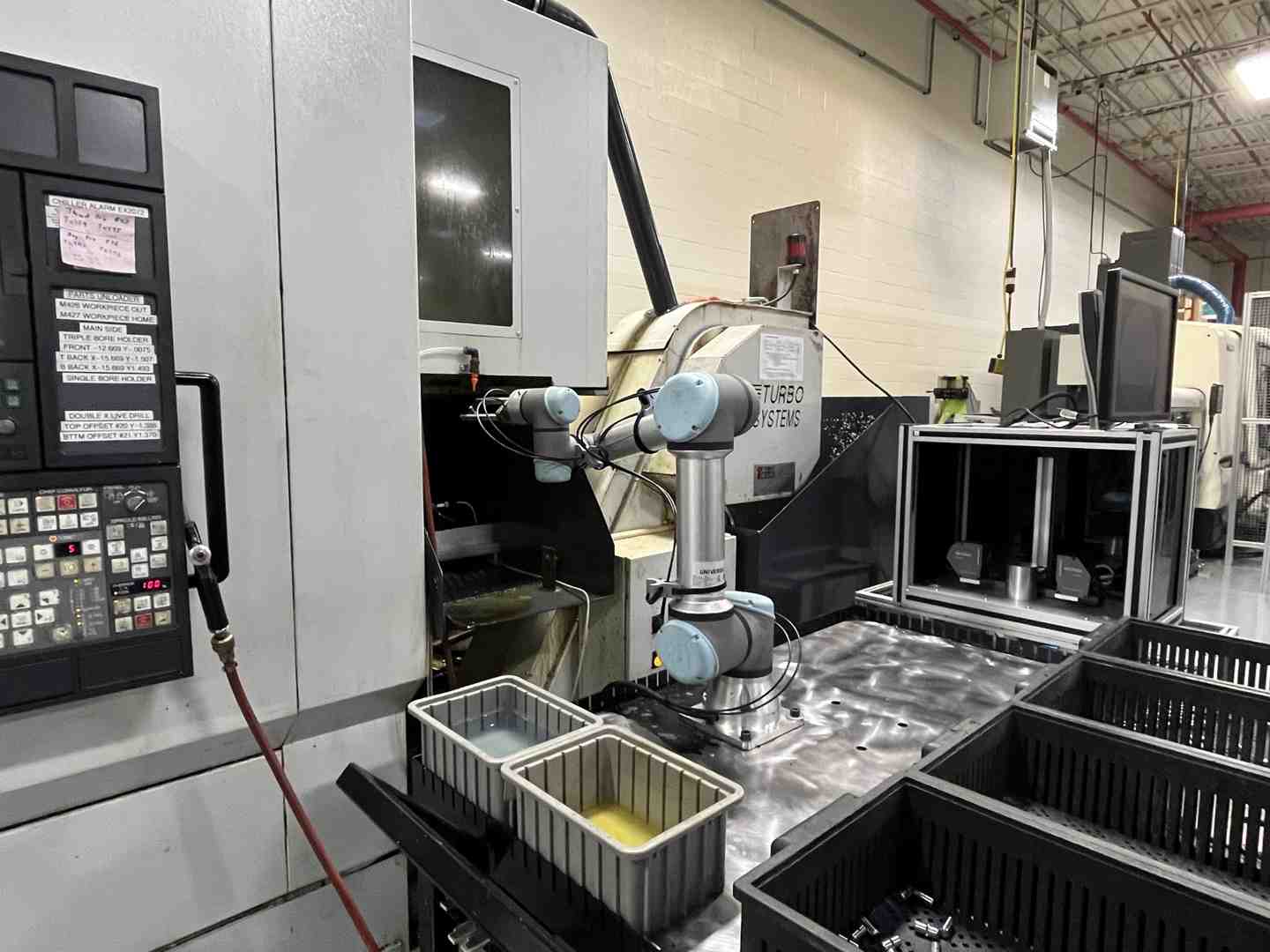
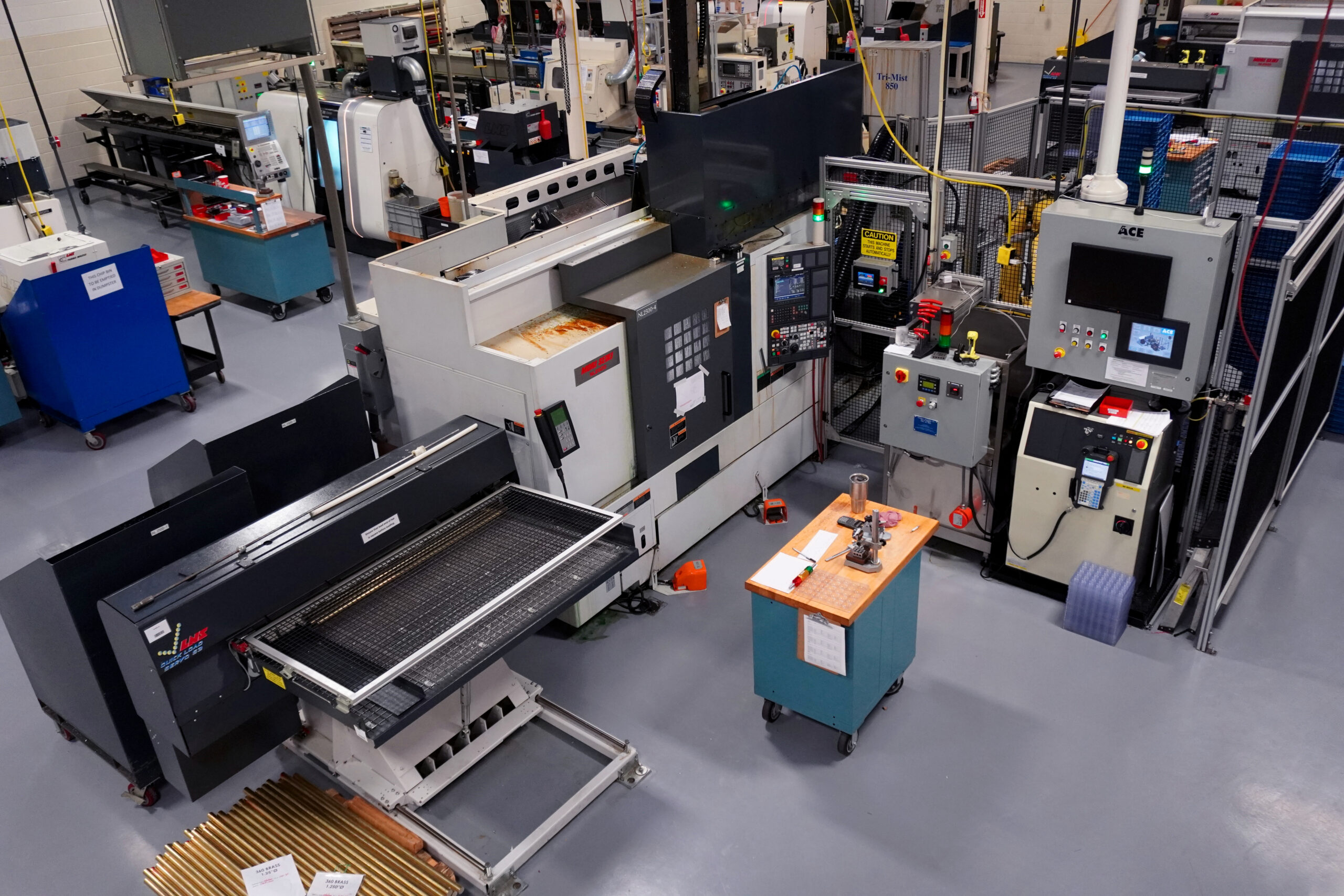
While looking at the potential contract manufacturing company’s size may provide insight into its flexibility, a smaller company offering cutting-edge automation can often do the job just as well, if not better. In these cases, technological capabilities are far more critical than the size of the vendor. Of course, smaller companies are nimbler, while providing quality that’s at least as good as that a larger vendor can offer. For precision machining of parts, scalability can be augmented by a contract manufacturer’s use of automation. Automated capabilities not only allow for scaling but ensure better quality as well.
Access to Specialized Resources & Expertise
One of the most important evaluations a hiring company can make is of a potential contractor manufacturer’s quality control system. Having broad quality management guidelines like ISO 9001 will ensure that any products the vendor makes are of a certain quality. It’s essential, too, that a vendor meets certain industry benchmarks, such as the AS9100 specialization for the aerospace industry or ITAR (International Traffic in Arms Regulations) for defense contractors. Contract manufacturing opportunities might include cutting-edge machinery, specialized skills of the vendor’s employees, or other resources that aid fabrication without the hiring company’s additional capital investment.
Expertise and equipment a contract manufacturer brings to the table might include:
- Assistance with design for manufacturing to make production of an item easier.
- Engineering services that include research studies related to the design, development, and testing of a new product or part.
- Equipment capable of manufacturing to the required tolerances, such as automated systems, advanced quality inspection systems, and 5-axis CNC milling machines.
- Regular calibration, inspections, and servicing align with a cohesive preventive maintenance plan.
- Team that can assist with material selection, plans regarding how products will be fabricated, and other production elements.
- Technical support that includes analysis and troubleshooting of issues.
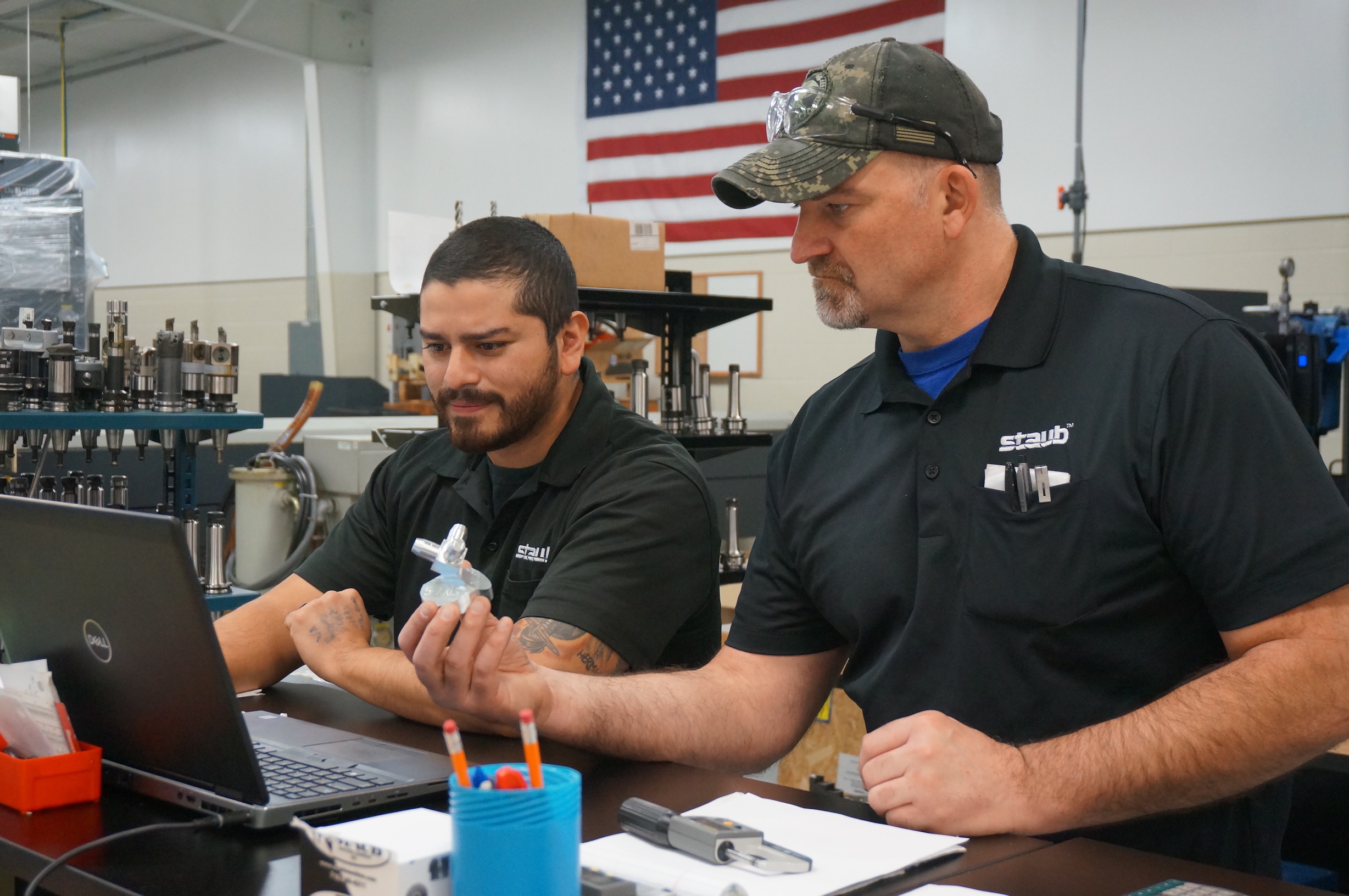
- Well-trained staff with sufficient expertise in the processes involved in the hiring company’s fabrication needs.
Before signing a contract, it’s vital to determine whether a potential vendor has the expertise and equipment to perform the work necessary to produce the hiring company’s product. Manufacturing opportunities might abound from hiring a contract manufacturer, but only if they have the appropriate capabilities. For this reason, it’s a good idea to visit the vendor’s physical production facility and ask pointed questions to ensure the best vendor is hired for a project. The benefits from properly outsourcing production free up resources that can be better used for core competencies, such as branding or research and development.
Contract Manufacturing Opportunities with Staub Precision Machine
Staub Precision Machine Inc. offers a wide range of services on contract. Manufacturing opportunities for our customers include cutting-edge machining and other production equipment, including custom components and subassemblies. Our trained staff also offers expertise in various value-added services, along with our extensive automated capabilities.
With Staub’s capabilities, customers benefit from in-house engineering experts who can streamline the design process, low error rates for precision parts, skilled machine operators, and other advantages that reduce production costs by increasing efficiency. By taking advantage of contract manufacturing opportunities by partnering with Staub, our customers can focus on other aspects of their business, such as customer service or expanding markets. Not only can Staub lower production costs and improve quality, but we can also help upscale businesses to augment growth.
Capabilities Staub can provide our customers include:
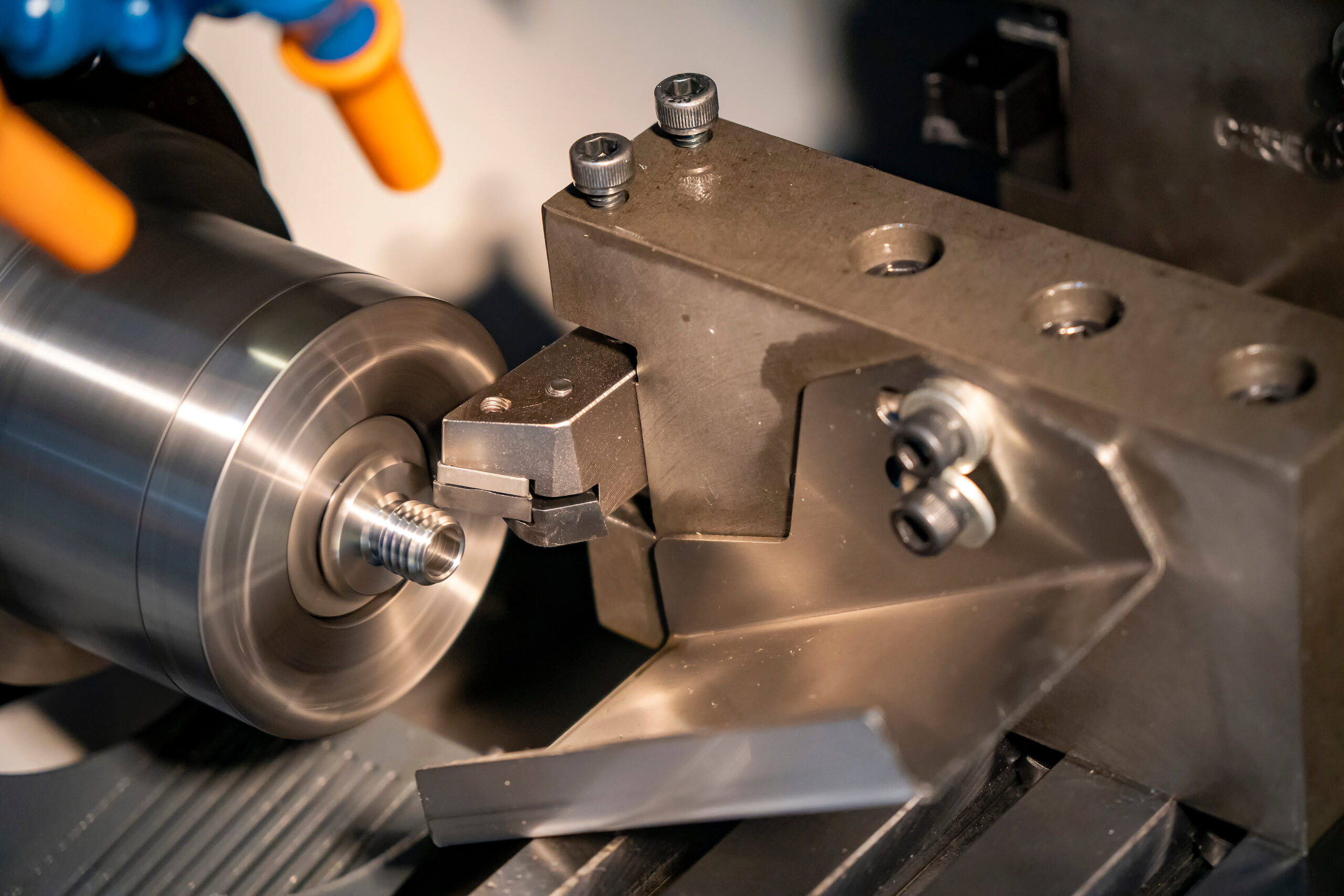
- 5-axis CNC machining services
- AS9100 certification for the aerospace industry
- Deburring and other finishing services
- Electric discharge machining (EDM) services
- Metal assembly and fabrication capabilities
- Rotary transfer machining
Staub also offers other value-added services under contract. Our manufacturing capabilities include various technical finishing services, while we also rely on our associations with trusted third-party providers for other services. To learn more about Staub Precision Machine and the contract manufacturing opportunities we can provide your company, contact us today.
Last updated on June 9th, 2025 at 02:30 pm