

Staub Precision Machine has come a long way, from its humble beginnings in a garage off New York’s Route 75 to an industry leader working with cutting-edge CNC machining technology. This year, the company celebrates fifty years of innovation and leadership in the machining industry. Throughout the past half-century, the company has evolved considerably, though it continues to maintain a commitment to excellence that’s created enduring business partnerships and customer relationships.
The 50-Year Journey of Staub Precision Machine
In 1975, Tony Staub founded a machine shop then known as the Staub Machine Company in his garage in Hamburg, NY. Tony Staub’s entrepreneurial vision continues to inspire, while the company he founded has grown and carries on as an industry leader. In large part, Staub Precision Machine’s investments over the years have focused on new machining technology that add to the company’s capabilities. Investment in cutting-edge equipment, staff training and innovation are at the center of Staub’s success throughout this past half-century.
An Investment in Advanced Technology
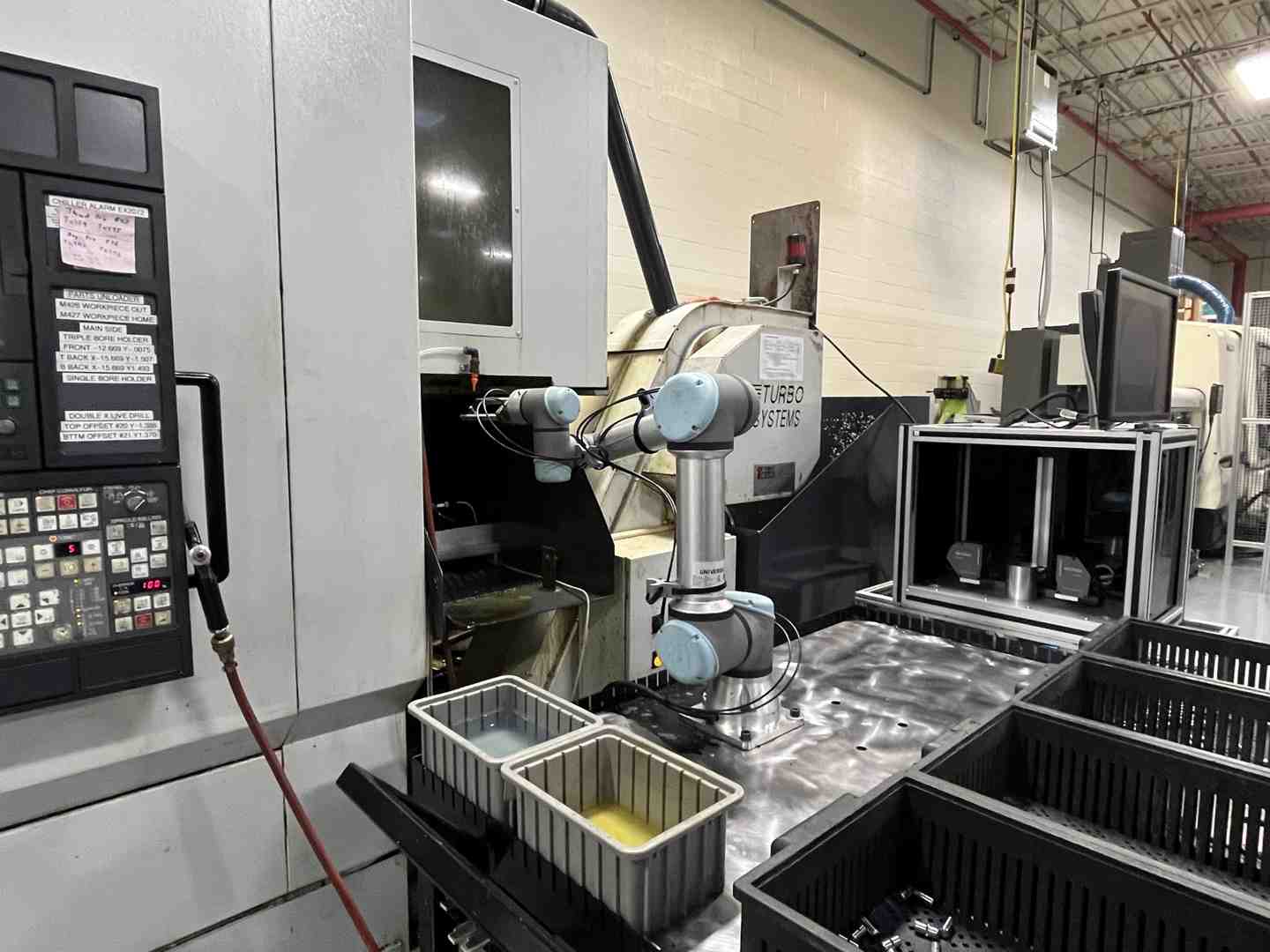
Staub was adding technology and developing automated systems at a time when machine shops were only grudgingly adopting such advanced technology. This gave Staub an advantage over other shops, even enabling a nascent form of lights-out manufacturing back in the 1980s.
Integrating automated machinery and robots to conduct tasks without direct human involvement increased the amount of production the shop could do. However, automation was about more than just increasing system uptime. It pushed employees to learn and grow with the company as it stayed on top of progress within the machining industry. This constant drive to optimize operations still stands at the core of Staub Precision Machine’s development to this day.
Growing Pains: The Early Years of the Company
While Staub started with a Bridgeport mill, drill press and manual lathe in a garage, the idea was initially a simple one: bring in enough business to pay the bills. So Staub took any work that was available, though these jobs were all initially for local customers. In the early years, money from jobs largely went back into the business.
By 1980, the business outgrew the garage and the machine shop was relocated to larger premises across town on the Allendale Parkway. By the mid-1980s, however, the machine shop had become reasonably successful, allowing him to hire employees while also investing profits in new equipment and technologies. By 1995, Staub’s rapidly increasing business allowed the company to move into an even larger facility on Lake Street, formerly the site of a Super Duper grocery store.
Investment in Cutting-Edge Technology
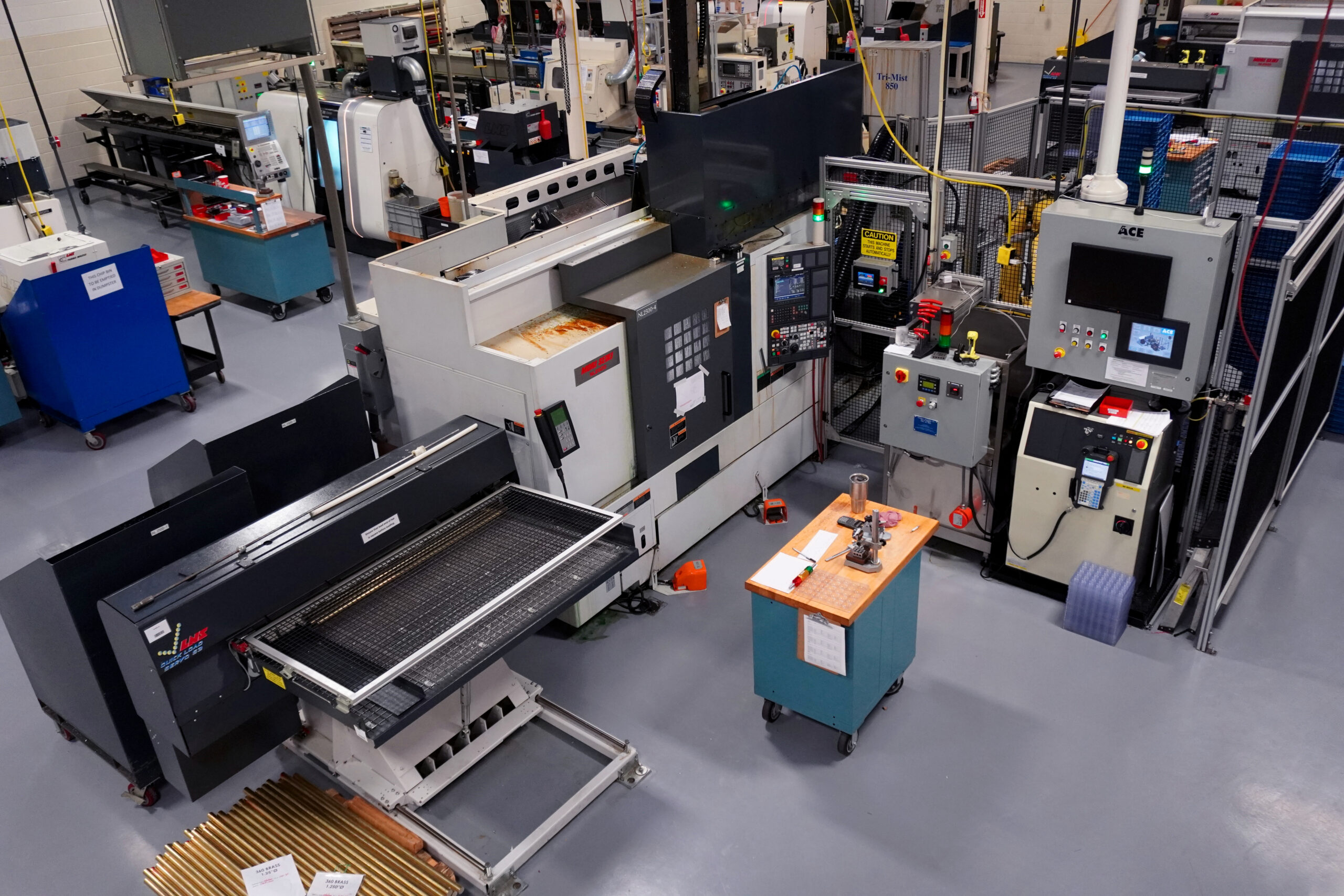
Staub was an early adopter of 4-axis CNC milling and live tool lathes, but implementation of automation accelerated at the cusp of the 21st century. The company came to purchase its first linear pallet pool (LPP) system in 1998, followed by a second and third LPP system in 2005 and 2009 respectively. These automated pallet handling systems optimize production by enabling multiple machine tools to share use of the pool of pallets. This streamlines production by making loading and unloading of workpieces more efficient, while in turn reducing equipment downtime.
With these purchases, Staub became the biggest user of LPP technology in the region. Now seen as a pioneer throughout western New York because of Staub’s increasing use of cutting-edge technology, the company was on a roll. The LPP systems greatly improved efficiency and output, bringing in even more work. The expanding business purchased two properties about a mile away from their Lake Street machine shop in 2010 to make room for an even larger facility on Grimsby Drive, which was later renamed Staub Drive. By the end of 2011, Staub was making over 3 million parts annually.
But investing in technology doesn’t always provide a straightforward line to greater profitability. The company discovered this when they bought a million-dollar 5-axis machining center, which saw no use for a year after its purchase. That said, after a year the machine was working 95 hours per week on one job, with a second project lined up for an additional forty hours. All this was done with minimal labor costs, proof enough that the use of innovative technology still holds true over time.
Investing in Quality & Employees
In March 2015, Staub achieved ISO 9001 certification, a standard for quality management systems that’s recognized globally. With Staub’s certification, customers were now assured of the company’s commitment to consistently produce quality parts for their products. While ensuring that customers’ needs and expectations would come first, companies certified under ISO 9001 also look to continuously seek ways to improve performance and processes.
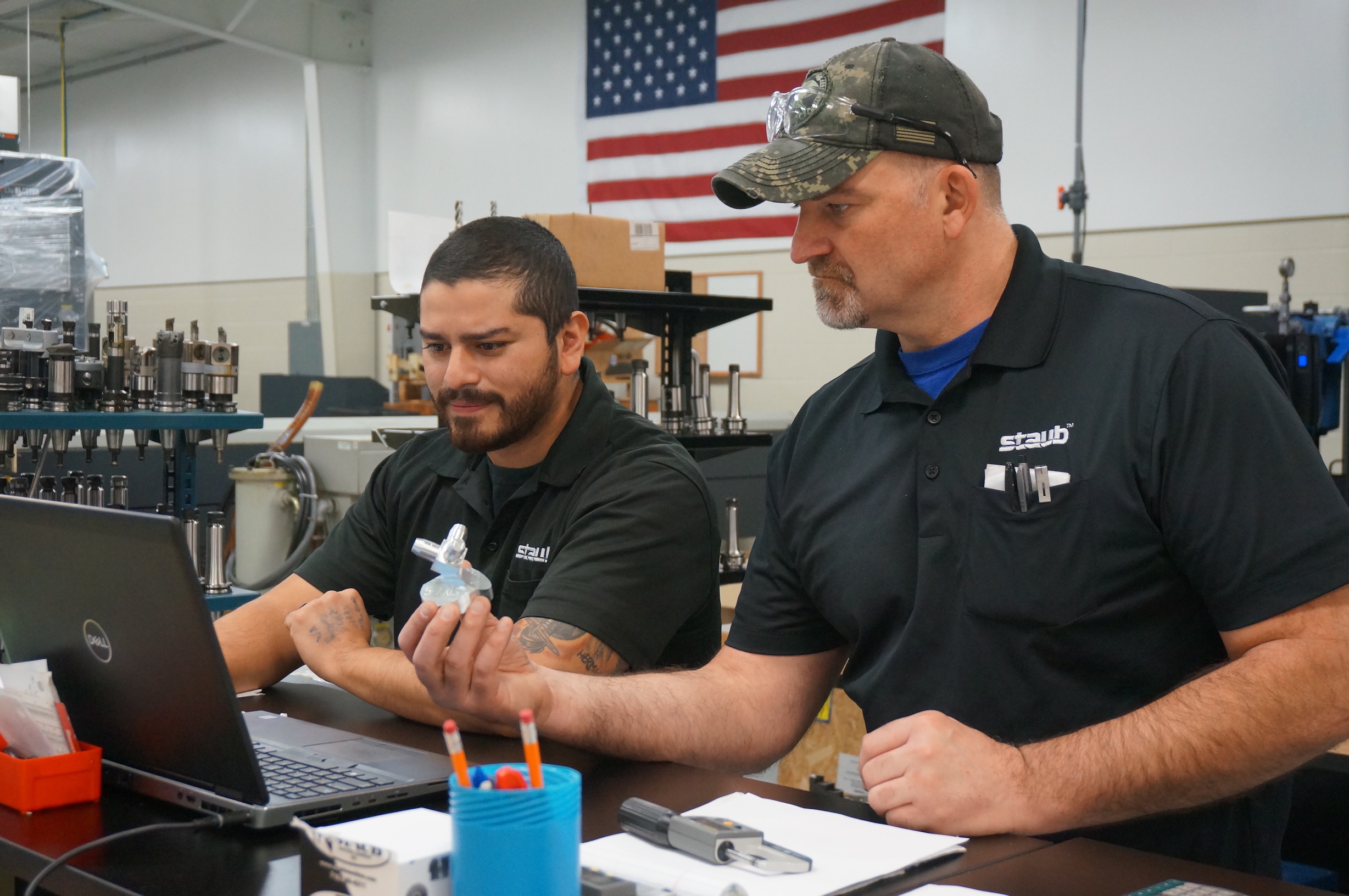
In conjunction with this quality management certification, Staub has always been dedicated to creating an expert workforce by investing in employee training programs. By increasing their skills, Staub’s workers are what help the company maintain its competitive edge. This later led to Staub obtaining their AS9100 certification in 2021, allowing them to ensure regulatory compliance in the aerospace industry. This certification, combined with improved operational efficiency, continuous improvement in their quality management systems and enhanced reputation in market, Staub has been able to grow their business and customer base within the aerospace industry.
Collaborating with & Solving Problems for Our Customers
Staub’s business model relies on customers’ success, as the company doesn’t produce or sell its own products. Rather, the parts they produce must work exactly according to their customers specifications, which is why it’s so important to build long-lasting relationships. Understanding their needs enables Staub to provide customized solutions to each customer’s unique challenges. Their customers trust them enough to give Staub a seat at their table, and it’s this collaboration between Staub and its manufacturing partners that have helped make the company a success.
For example, one of Staub’s larger customers, an aerospace company, approached Staub in the early 2000s with a project. A much larger company, they sought out Staub due to the company’s reputation for providing precision parts in quantity. Like many customers, this large company came with a problem that required a solution. As a company building systems for high level commercial and government clients, the work involved extraordinary levels of confidentiality, an uncommon requirement for most customers at the time.
Additionally, this new partnership required Staub to provide services that were on the fringe of the company’s capabilities. This included complete finishing of parts, which included deburring, helicoiling, painting and plating. Early in the relationship, this customer pressed Staub and its employees to constantly improve to meet their partner’s goals. This customer saw the potential in Staub’s operation, encouraging the company and sending personnel to provide assistance.
Today, Staub Precision Machine routinely provides thousands of these same components while turning a profit, thanks in large part to taking on this project. And those additional capabilities have become central to Staub’s offerings today. This collaboration saw Staub expand its capabilities while giving a customer exactly what they needed. In turn, the efforts our company put into this project paid off, as this same customer returned to us to help them solve another problem, meaning years or even decades worth of additional business.
When the Latest Technology Isn’t the Answer
While Staub Precision Machine touts its technological capabilities, we’ve also learned that using the latest CNC technology isn’t always the best solution. This might seem odd coming from a machine shop that takes pride in its cutting-edge CNC setup, but sometimes the most advanced technology isn’t the most cost-effective means to solve a problem. They discovered this when approached by a customer that approached them with a new opportunity that involved the drilling and countersinking of holes into customized aluminum workpieces.
With a goal of half a million parts produced annually, Staub saw that using the latest high-end CNC automation would make the project uneconomical. So, the team dealing with this problem came up with a more flexible solution, developing a customized drilling machine that ended up delivering double the necessary throughput, which in turn made the job profitable. In the end, it wasn’t technology but rather the creativity and expertise of Staub’s team that made this a successful venture.
A 50-Year Journey: Milestones of Staub Precision Machine
- 1975: Tony Staub founds Staub Machine Company in his garage off Route 75 with a Bridgeport mill, drill press and manual lathe.
- 1980: The machine shop moves from the garage to 4149 Allendale Parkway.
- 1980s: Over the course of this decade, the building on Allendale doubles in size.
- 1995: Staub moves to an even larger space at 206 Lake Street, the location of the former Super Duper grocery store.
- 1998: Staub’s first LPP system was also purchased in this year.
- 2005: Staub adds a second LPP system.
- 2009: Staub adds a third LPP system.
- 2010: Two properties on Grimsby Drive – later renamed Staub Drive – are purchased to expand Staub’s operational capacity.
- 2011: Staub surpasses production of over 3 million parts annually.
- 2013: Production more than doubles from 2011 to reach 150,000 parts per week.
- 2015: Staub achieves ISO 9001 certification to support its commitment to quality and consistency in production.
- 2018: Purchased 5-axis machining center
- 2019: Purchased second 5-axis machining center
- 2021: Integrated new automated mill-turn center
- 2021: Staub achieves AS9100 certification, ensuring their regulatory compliance with requirements for the aerospace industry
- 2022: Staub purchases land at the end of Staub Drive and announces plans to expand its Staub Drive facility.
- 2024: Construction of a new, 60,000-square-foot building at Staub Drive begins, consolidating some operations under one roof, with construction finishing in 2025.
Staub Precision Machine: Into the Future…
Staub Precision Machine’s success lies in the ongoing relationships and collaboration with customers that makes the company what it is. While Tony Staub passed the baton on to a new generation of engineers and operators with the private sale of the company several years ago, the deep understanding and commitment between Staub and its customer base remains strong. The future going forward is a bright one filled with continuous innovation as they continue to streamline production.
Staub will continue to promote efficiency in their operations by integrating advanced technologies that increase automation, reducing the chance of human errors. In an ever-evolving manufacturing environment, the emphasis on building enduring partnerships with their customers will continue as before. Staub Precision Machine is more than our ultramodern machinery. Staub’s ethos relies on developing relationships with people, whether it’s developing employees through ongoing training or collaborating with customers to produce exactly what they need.The vision of Staub Precision Machine in many ways remains the same as it was from the start: delivering high-quality precision parts with high-tech equipment at high volumes, while coming up with the most efficient solutions to do so. For new, old and potential customers of Staub, they stand ready to engage with customers about how we can assist with their project. To learn more about their capabilities, we invite you to contact the machining experts at Staub today.