

A fundamental, strategic realignment is occurring within the global manufacturing community. Original Equipment Manufacturers (OEMs), once primarily focused on minimizing unit costs through offshoring, are increasingly shifting their focus to resilience, quality, and control by bringing their precision CNC machining needs back to the United States. This movement, known as reshoring, is not merely a reaction to recent crises but a calculated business decision driven by a comprehensive evaluation of the total cost of ownership, which often makes U.S. manufacturing more cost-competitive than initially assumed. This trend presents a significant opportunity for high-tech precision machine shops across the US to build robust, localized partnerships and reassert American manufacturing excellence.
Supply Chain Resilience: from Strategic Advantage to Operational Requirement
When manufacturing is concentrated in a single offshore region, even a localized disruption can cascade across an entire supply chain. These offshoring strategies limit flexibility, reduce visibility, and leave businesses with few viable contingency options when a disruption occurs. Recent global events—including pandemics, geopolitical conflicts, natural disasters, labor shortages, regulatory changes, and port congestion— have repeatedly caused major shipping delays and widespread production shutdowns, and have exposed just how fragile offshore distributed supply chains can be.
Key Resilience Drivers Include:
- Reduced Vulnerability to Disruption: Organizations that once prioritized the lowest unit cost are now confronting the hidden operational, financial, and reputational risks embedded in offshore supply networks. This has shifted their focus to total value, risk mitigation, and operational excellence. By partnering with a high-tech precision machine shop in the United States, OEMs are making a vital investment in supply chain resilience, superior quality assurance, and the robust protection of their innovation, driving the next era of American manufacturing.
- Improved Cash Flow and Responsiveness: Ultimately, these shorter US-based supply lines optimize logistics and cash flow. Parts can be delivered in days or weeks, rather than the months required for international shipping and customs clearance, enabling the implementation of lean manufacturing and “just-in-time” (JIT) inventory systems. This reduces the need for expensive inventory buffers, improves cash flow, and enhances overall operational speed and responsiveness.
- Reduced “Inventory on the Water” Risks: Heavy reliance on ocean freight results in weeks or even months of inventory tied up in transit, effectively immobilizing working capital and increasing exposure to forecasting errors. Long transit times restrict a company’s ability to respond quickly to changes in customer demand, design updates, or regulatory requirements. In addition, quality issues discovered upon arrival can have severe consequences—if a defect is identified in a single shipment, it may necessitate recalling, reworking, or scrapping large volumes of in-transit and warehouse inventory, significantly increasing costs and operational complexity.
“As a precision machine manufacturer, we work with companies who have come to us after a manufacturing fail overseas. More often than not, the failure wasn’t because of machining complexity, but because offshore lead times eliminate any margin for recovery when something changes,” said Cameron May, General Manager at Staub Precision Machine.
These challenges have elevated supply chain flexibility from a strategic advantage to an operational necessity, prompting many organizations to reassess sourcing strategies, supplier proximity, and manufacturing control.
The Total Cost of Ownership Reassessment
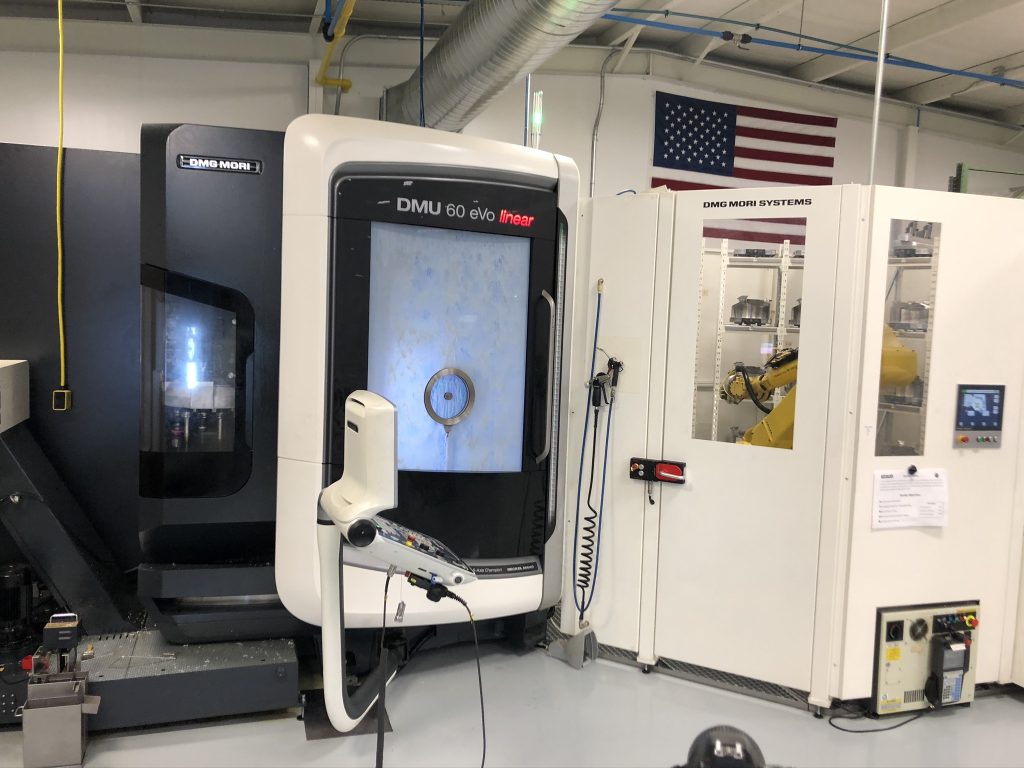
Staub Precision Machine has continually invested in cutting-edge CNC technology, becoming a machine shop The perceived cost advantage of overseas CNC manufacturing for precision-machined components often erodes quickly when subjected to a comprehensive Total Cost of Ownership analysis. While offshore quotes may show a lower piece price, they frequently exclude the downstream costs associated with quality assurance, logistics, engineering changes, and supply chain risk—factors that are particularly critical for tight-tolerance, high-mix, or application-critical parts. These “hidden” costs add up rapidly. “By the time customers account for engineering rework, inspection overhead, shipping, transport, tariffs and the logistics risk, the piece price is no longer a deciding factor,” said May.
Primary contributors to TCO erosion include:
- Rising Overseas Wages & Tariffs: Labor rates in historically low-cost manufacturing regions have steadily increased, particularly for skilled CNC operators, programmers, and quality technicians capable of producing close-tolerance components. When added to fluctuating tariffs, duties, customs brokerage fees, and compliance requirements, the initial unit-cost difference narrows or disappears entirely.
- Regulatory & Traceability: For customers with regulated or traceability-driven applications, the administrative burden and cost of ensuring offshore compliance further compounds the issue.
- Logistics Volatility: Offshore sourcing often requires long, inflexible supply lines. Volatile fuel prices, container imbalances, port congestion, and extended transit times can lead to high, unpredictable freight costs. More importantly, long lead times reduce a customer’s ability to respond to shifts in demand, engineering revisions, or production ramp-ups. A single missed delivery window can shut down assembly lines and delay product launches, resulting in additional costs that far exceed any initial savings in piece price.
Hidden Manufacturing & Quality Costs:
Managing quality issues across multiple time zones adds significant overhead. Nonconforming parts discovered upon receipt often require lengthy root cause analysis, rework, or full-lot rejection, with limited recourse once parts have crossed an ocean. Communication delays slow corrective actions, while engineering changes or tolerance clarifications can take weeks to implement. Many customers are forced to absorb additional costs related to on-site inspections, third-party audits, expedited freight, or overseas travel to maintain quality standards.
In contrast, a domestic precision machine shop enables direct collaboration between engineering, production, and quality teams, accelerating problem resolution and minimizing scrap and downtime.
For precision components where performance, repeatability, and delivery reliability matter, the value of a capable U.S.-based machining partner extends well beyond the quoted price per part. By fully quantifying the Total Cost of Ownership, factors such as logistics risk, quality management, engineering responsiveness, and supply chain resilience once again demonstrate that domestic CNC machining is more cost-competitive.
Speed to Market and Agility
In fast-paced, competitive markets, speed to market is a technical and operational differentiator. OEMs must move quickly from concept to prototype and into production, and that responsiveness is heavily influenced by their CNC machining partner’s capabilities. A domestic precision machine shop enables early Design for Manufacturability and Assembly (DFMA) collaboration, allowing engineers to work directly with CNC programmers and machinists to optimize geometry, tolerances, materials, and fixturing before production begins. This upfront alignment shortens development cycles, reduces the risk of tolerance stack-up, and minimizes costly design revisions.
Proximity also drives production agility. Shorter supply chains allow for faster prototyping, expedited first-article inspection, and rapid implementation of engineering changes during validation and ramp-up. A proficient CNC machine shop with flexible capacity, multi-axis equipment, and in-house programming can quickly adjust volumes, modify batch sizes, and respond to demand fluctuations without the constraints of long lead times or rigid schedules. For customers manufacturing tight-tolerance or complex components, this agility reduces program risk and accelerates time to revenue without sacrificing quality or delivery performance. “Most tolerance and quality issues are preventable when machinists and programmers are involved before the design is solidified,” said Gatlin Walters, Quality Control Manager at Staub Precision Machine.
In contrast, international supply chains inherently lack this level of agility. Extended transit times, language barriers, and time-zone differences slow communication and delay corrective action. A single design change or quality issue can halt progress for weeks, undermining development timelines and delaying market entry. For customers manufacturing precision-critical parts, the ability to respond quickly and decisively often outweighs nominal cost differences, making speed and agility central considerations when selecting a CNC machining partner.
Unmatched Quality Control and Consistency
In precision-driven industries such as aerospace, medical devices, defense, and advanced automation, quality is not a variable—it is a requirement engineered into every process. For customers sourcing CNC-machined components, consistent dimensional accuracy, material integrity, and repeatability across production runs are essential to system performance, regulatory compliance, and long-term reliability. A qualified precision machine shop builds quality into the manufacturing process rather than relying solely on final inspection.
Core Quality Differentiators:
- Rigorous Standards and Quality Process Control: U.S.-based precision machine shops typically operate under highly structured quality management systems, including ISO 9001 (manufacturing), AS9100 (aerospace), and ISO 13485 (medical applications). These frameworks mandate documented work instructions, controlled revision management, validated machining processes, and formal corrective and preventive action (CAPA) systems. From raw material certification and lot traceability to in-process inspection and final acceptance, every step is governed by repeatable, auditable procedures. For customers, this translates into reduced variability, predictable outcomes, and confidence that parts will perform consistently across multiple builds and program lifecycles. “Final inspection does not create quality – process validation and control do,” said Walters.
- Direct Oversight and Collaboration: Local manufacturing enables direct, real-time engagement between the OEM’s engineering, quality, and procurement teams and the machine shop’s production and inspection staff. Customers can participate in first-article inspections, review inspection reports on the shop floor, and validate critical-to-quality features before production ramps up. This proximity accelerates issue resolution, clarifies GD&T intent, and reduces the risk of tolerance misinterpretation. When questions arise regarding surface finish, datum structure, or functional fit, they can be addressed immediately—preventing the costly rework and schedule delays often associated with remote suppliers.
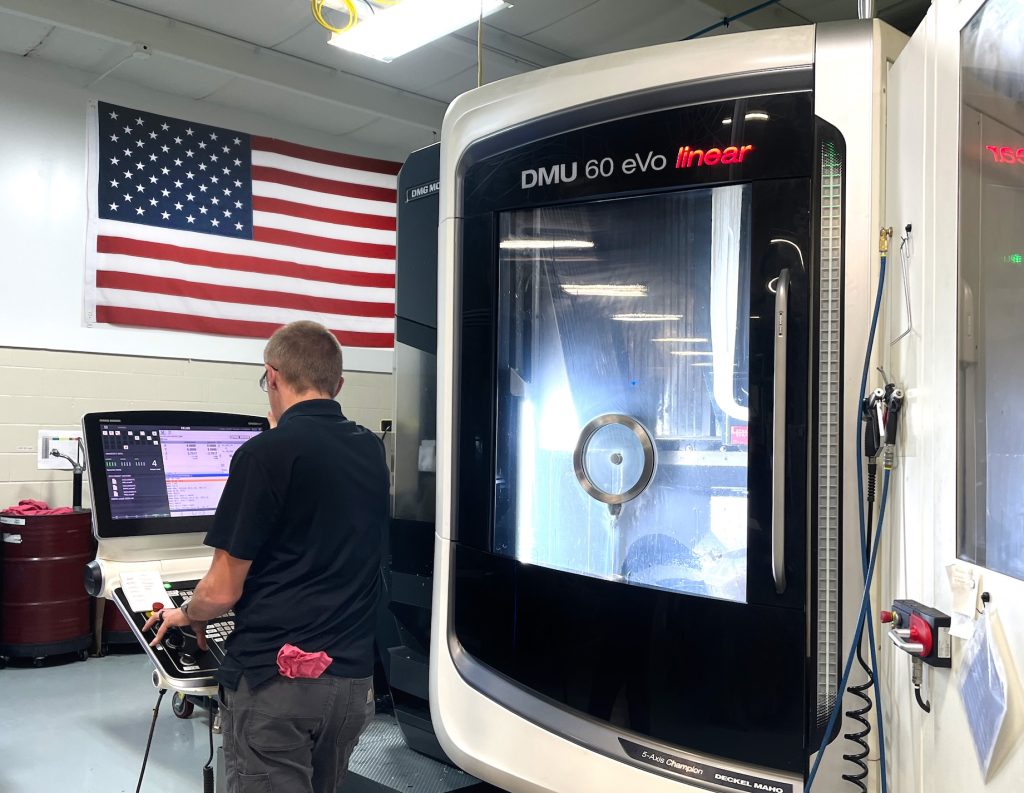
- Advanced Metrology and Inspection Infrastructure: Precision machine shops invest heavily in advanced inspection technologies to verify increasingly complex part geometries. Coordinate Measuring Machines (CMMs), optical comparators, laser scanners, and in-process probing systems allow for accurate measurement of tight tolerances—often down to ±0.0002″—as well as true position, profile, and concentricity requirements. Statistical Process Control (SPC) is frequently applied to critical dimensions to monitor trends and ensure long-term process stability. For customers, this level of advanced metrology ensures that parts meet both dimensional and functional requirements, even in high-mix or low-volume production environments.
Together, these quality-focused practices deliver a level of consistency and reliability that is difficult to replicate in extended, offshore supply chains. Because failure is not an option, partnering with a precision CNC machine shop that prioritizes robust quality systems and an advanced inspection infrastructure is a strategic necessity, not a premium feature.
Enhanced Intellectual Property (IP) Protection
For high-tech OEMs, intellectual property extends beyond patents and drawings to include CAD/CAM data, CNC programs, custom fixturing, and proprietary machining processes. Manufacturing with a U.S.-based precision machine shop places these assets under a well-defined legal and contractual framework, supported by enforceable NDAs, controlled data access, and documented process controls. This significantly reduces the risk of unauthorized data sharing, reverse engineering, or unapproved secondary production runs that can occur in less regulated offshore environments.
Domestic manufacturing also provides greater visibility and traceability throughout the production process. OEMs can maintain direct oversight of machining methods, process development, and revision control while ensuring material certifications and serialized part tracking are properly documented. This level of control mitigates the risk of counterfeiting and protects proprietary know-how, making IP protection not just a legal safeguard, but a critical operational advantage when selecting a CNC machining partner. “The real intellectual property risk isn’t the drawing – it’s the machining strategy and process knowledge behind it. And that’s the expertise you will find leading your project at Staub,” said May.
Seamless Communication and Engineering Collaboration
Effective CNC manufacturing depends on precise, timely communication—particularly when parts involve complex geometries, tight tolerances, advanced materials, or challenging machining strategies. Time zone differences and language barriers common in offshore sourcing often slow decision-making and introduce ambiguity into critical engineering discussions.
A domestic partnership ensures:
- Real-time Collaboration: Engineers from both the OEM and the machine shop can collaborate seamlessly during standard business hours, accelerating troubleshooting, design iteration, and prototyping. This proximity allows rapid alignment on Design for Manufacturability & Assembly (DFMA), tooling selection, fixturing strategies, and machining methods such as hard milling, multi-axis contouring, or high-speed machining. Questions related to Geometric Dimensioning and Tolerancing (GD&T) interpretation, datum schemes, surface finish requirements, or material condition can be resolved immediately—often with the part, fixture, or CMM report on hand. Engineering changes, tolerance refinements, or process adjustments can be implemented and validated quickly, reducing iteration cycles and preventing costly scrap or rework.
- Clarity and Collaboration: Technical jargon and industry-specific terminology (like “hard milling”) are clearly understood, leading to fewer miscommunications and costly rework. Clear communication also ensures that technical specificity is preserved throughout the manufacturing process. Industry-specific terminology, material callouts, heat-treat conditions, and inspection requirements are fully understood and correctly executed. For customers, this level of collaboration translates into fewer assumptions, faster problem resolution, and higher confidence that parts will be produced exactly as designed, making communication effectiveness a critical factor when selecting a precision CNC machining partner.
Optimized Logistics and Cash Flow
Domestic supply lines fundamentally reshape both logistics efficiency and working capital management for OEMs sourcing precision-machined components.
- Shorter Lead Times: When parts are produced by a nearby CNC machine shop, lead times are measured in days or weeks rather than the months required for overseas production, ocean freight, and customs clearance. This compressed timeline enables faster responses to demand fluctuations, engineering changes, and production ramp-ups, while reducing the risk of schedule disruptions caused by port congestion, customs delays, or geopolitical events.
- Reduced Inventory Costs: From a financial and operational standpoint, shorter lead times support lean manufacturing strategies and just-in-time (JIT) inventory models. OEMs can order smaller batch sizes that align with actual consumption rather than forecasting months in advance, significantly reducing safety stock and inventory carrying costs. Cash is no longer tied up in in-transit inventory, and exposure to obsolescence from design revisions or program changes is minimized.
The improved cash flow and supply chain visibility often outweigh nominal piece-price differences, making domestic CNC machining a strategic advantage for both operational agility and financial positioning.
Conclusion: A Strategic Investment in the Future
The recent shift in the manufacturing landscape has OEMs moving beyond a singular focus of low unit price and embracing a more strategic approach focused on total value, risk mitigation, and operational excellence. By partnering with a high-tech precision machine shop here in the United States, OEMs are making a vital investment in supply chain resilience, superior quality assurance, and the robust protection of their intellectual property.
Staub Precision Machine is committed to leveraging advanced technology and a highly skilled workforce to deliver unparalleled precision, reliability, and value, leading the next era of American manufacturing innovation.