

Aerospace manufacturing demands precision, efficiency, and repeatability. As the industry pushes for lighter materials, tighter tolerances, and faster production cycles, automation continues to reshape how components are made. At Staub Precision Machine, we have invested heavily in automation to improve consistency and scale production for aerospace applications.
How Automation Advances Aerospace Manufacturing
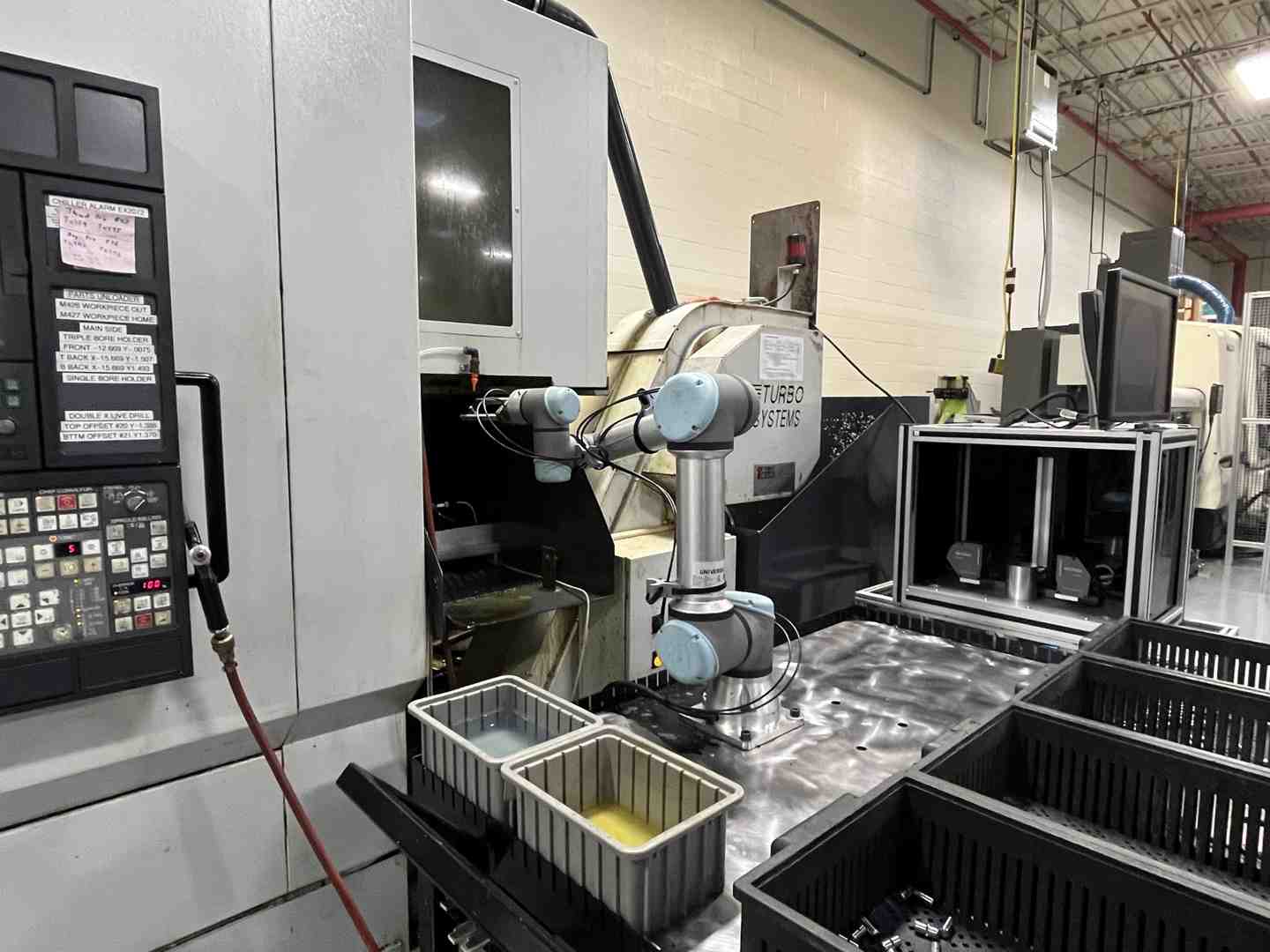
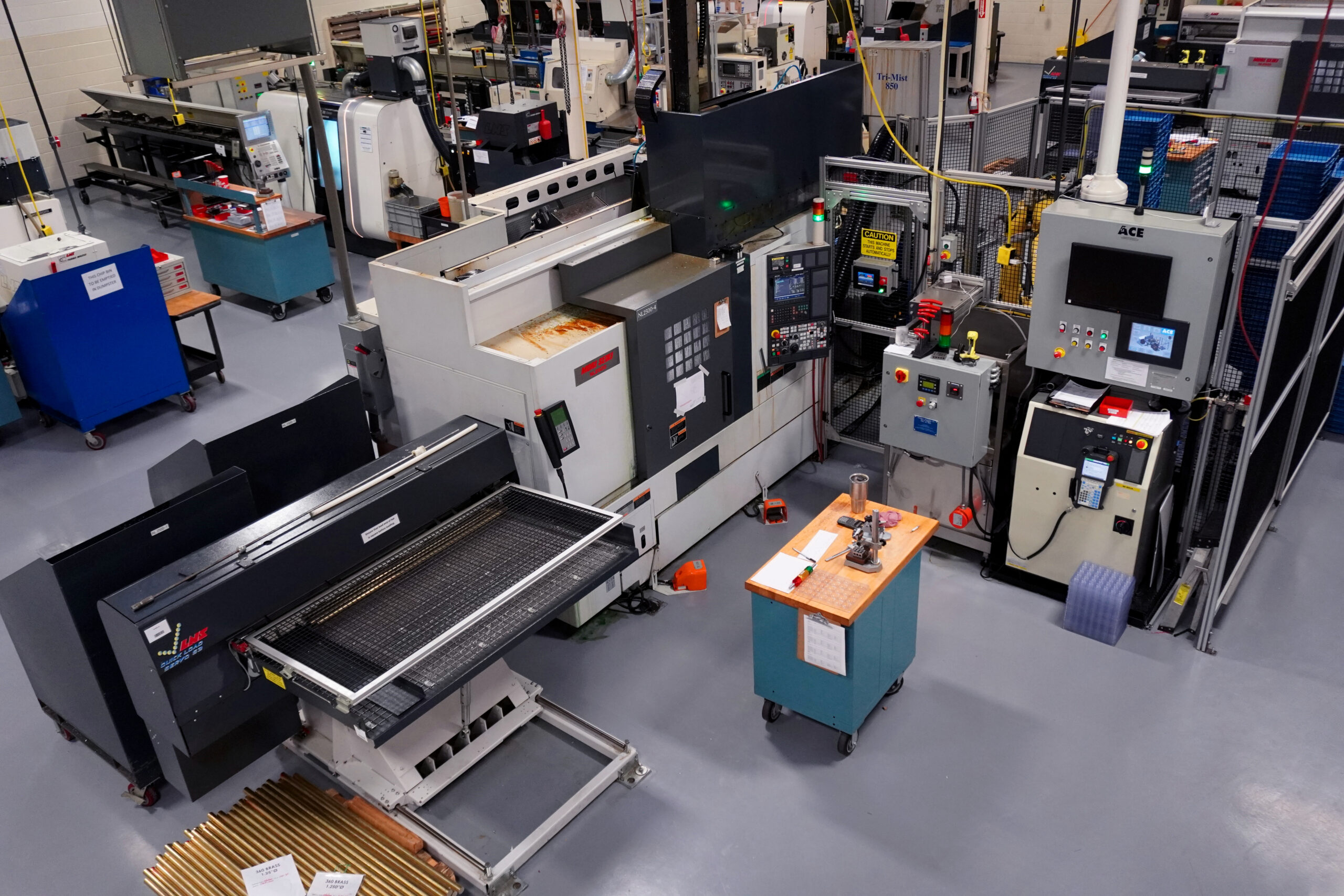
Aerospace automated manufacturing has evolved to include robotic machining, automated inspection, and unmanned production cells. These technologies help reduce variability, lower costs, and increase throughput. We integrate robotics with CNC machines to streamline operations, allowing us to run high-precision jobs with limited manual intervention.
Automation improves part quality by reducing human error. Our CNC equipment, paired with robotic loading systems, maintains tight tolerances without interruptions. With multi-axis machining centers operating alongside automated guided vehicles (AGVs), we can move raw materials and finished parts efficiently across the shop floor.
Meeting Aerospace’s High Standards with Automation
Automated processes help us comply with aerospace industry standards, including AS9100 certification. This certification demands strict quality control measures and traceability throughout production. With automation in place, we can document every step of the manufacturing process while maintaining a consistent output.
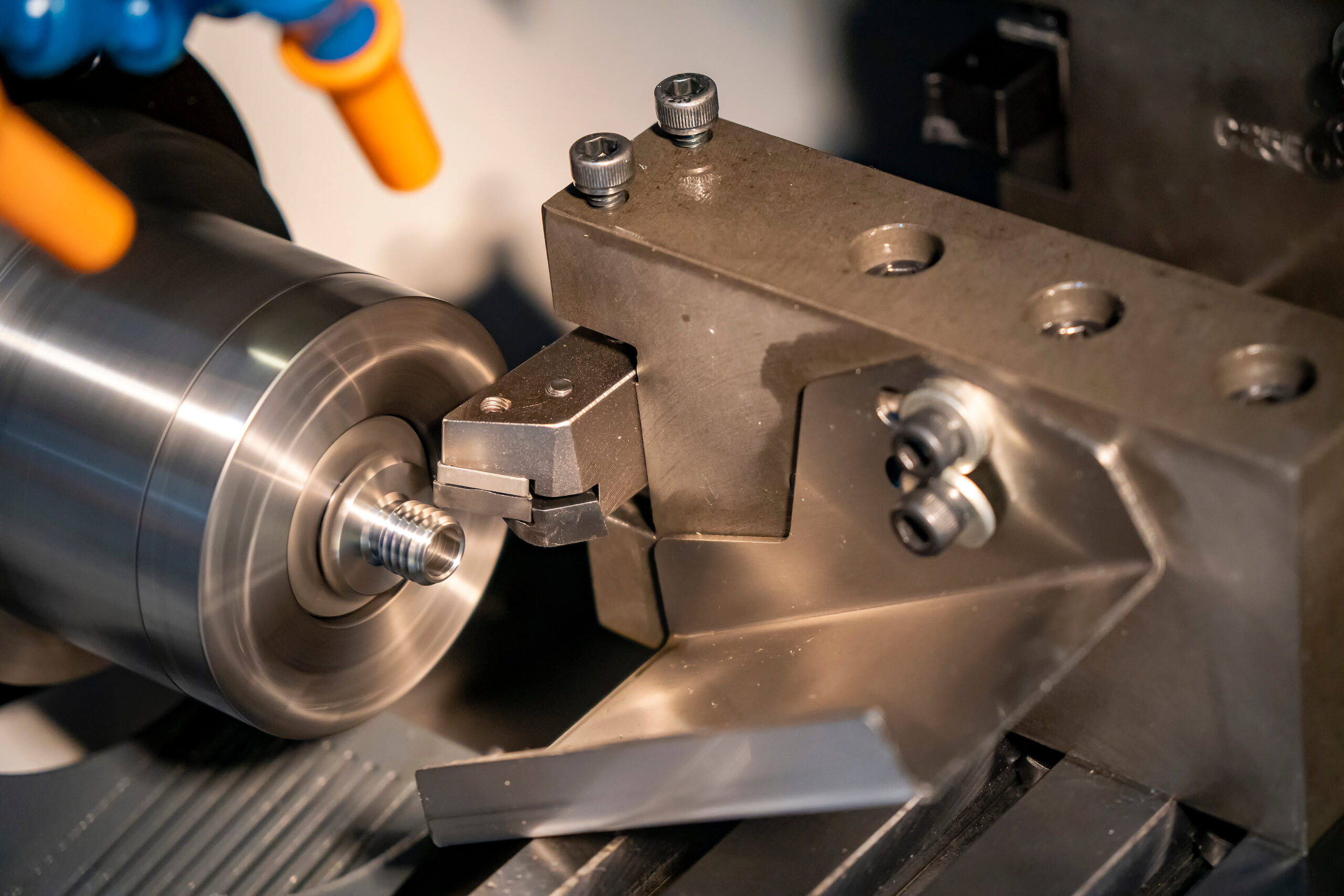
High-precision machining is essential for aerospace components that must perform under extreme conditions. Our robotics minimizes material waste by optimizing each cut, ensuring that forged titanium or aluminum billets are used efficiently. The result is high-quality parts produced in less time and with fewer defects.
Precision Through Robotics and Smart Technology
Traditional machining requires constant supervision, but automation allows us to run lights-out production. Our automated manufacturing systems handle loading, unloading, washing, and inspection without operator input. This approach not only reduces labor costs but also improves repeatability in every batch.
We use vision-guided robotics for real-time quality control. High-speed measurement systems check dimensions as parts come off the machine, eliminating potential errors before they reach final assembly. Automated inspection ensures that aerospace components meet exact specifications before they move to the next stage of production.
The Role of Flexible Manufacturing Systems
Flexibility is essential in aerospace production since parts come in various sizes and complexities. Our flexible manufacturing systems (FMS) allow us to switch between jobs without lengthy setup changes. By using palletized automation with 5-axis machining, we complete multiple operations in a single setup, reducing downtime between runs.
With robotic workpiece handling and intelligent scheduling software, we optimize production across multiple machines simultaneously. This approach helps us meet the growing demand for aerospace components while maintaining short lead times.
What’s Next for Aerospace Automation?
The future of aerospace automation will focus on even smarter robotics and AI-driven decision-making in manufacturing processes. Cobots—collaborative robots—will likely play a larger role in handling complex assemblies where full automation isn’t yet possible. Advancements in additive manufacturing may also integrate with automated machining for hybrid production methods.
At Staub Precision Machine, we continue to invest in new technologies that shape the future of aerospace machining. Our goal is to push efficiency further while maintaining the precision required for mission-critical applications. As aerospace demands evolve, automation will become even more indispensable in meeting the industry’s exacting standards.
Last updated on June 9th, 2025 at 01:44 pm