

Industrial Automation: Production Scaling Challenges for Parts
Scaling production is among the most difficult challenges that parts manufacturers face. While providing quality goods and services is a natural consequence, it also stretches a company’s capabilities to meet this increased demand. While growth in demand is desirable, it can also lead to production bottlenecks, longer wait times for customers, and even lower-quality components. Having scalable systems already in place gives manufacturers greater agility in the marketplace. With automation, production growth is much easier and can happen quickly.
Some specific ways in which automation benefits parts production include:
- Aiding scalability by allowing speedier and round-the-clock production.
- Building high-quality prototypes through CAD (computer-aided design) and CAM (computer-aided manufacturing) software.
- Decreasing the possibility of human error, which can lead to downtime or other production delays.
- Enabling predictive maintenance by deploying monitoring equipment and software that optimizes production.
- Improving quality by reducing the need for manual labor, especially when it comes to dangerous or repetitive tasks.
- Increasing output while also reducing labor costs, leading to higher profits.
- Making the fabrication process more efficient and sustainable while reducing energy usage and waste.
- Permitting companies to bring products to market more quickly.
- Reducing the chance of workplace accidents by using sensors that automatically shut down production when hazards disrupt manufacturing processes.
Automated systems require significant investment, however. It’s not just the cost of the new technologies but also concerns expenses for employee training and adjusting production processes to keep pace with demand. Understanding how to use digital technology when scaling parts manufacturing is even more important after the pandemic, aggravating some of the business’s challenges. COVID showed how fragile the world’s supply chains were, bringing inflation rates not seen in decades. By increasing automation, production challenges involving material usage, production quality, and overall efficiency can be better met.
Material Usage
One way automated machining processes support production scaling involves how materials are used. Raw materials are a major expense for CNC machining operations, sometimes as much as half the cost of the parts manufacturing process, depending on the type of material used. Using automation, production processes can be streamlined so less material gets wasted, bringing down overall costs. As an example of programmable automation, production with CNC technology enables machine shops to conserve better the raw materials used to fabricate components.
Material waste is inevitable in any machine shop, but the amount produced can be mitigated through properly applied automation. Production involving machining will naturally produce a certain amount of scrap and defective components, but automated solutions greatly reduce this. By digitizing processes, manufacturers can make parts production more efficient. In today’s smart factories, sensors gather data and send it to the machine’s controller, where the information is processed. Analytics software then evaluates this data and produces reports that help make decisions, leading to less waste and fewer defects.
Production Quality
The quality of machined parts closely aligns with material waste, and it, too, benefits from automation. Production quality tends to drop when companies scale up component fabrication, often resulting in increased scrap generation and reduced component quality, often leading to more reworking. Reworking a part requires additional time and expense, raising production costs negatively affecting profitability. With automation, production lines see fewer errors or inconsistencies in their components.
Production lines incorporating digital elements provide greater control over manufacturing processes when used with robots or other automation types. This helps ensure quality doesn’t suffer when a company scales up production. Automation also benefits from analytics software, which is used with real-time data from smart sensors to help identify quality issues earlier in the parts fabrication process. This way, component defects can be easily identified, and quality issues can be addressed sooner.
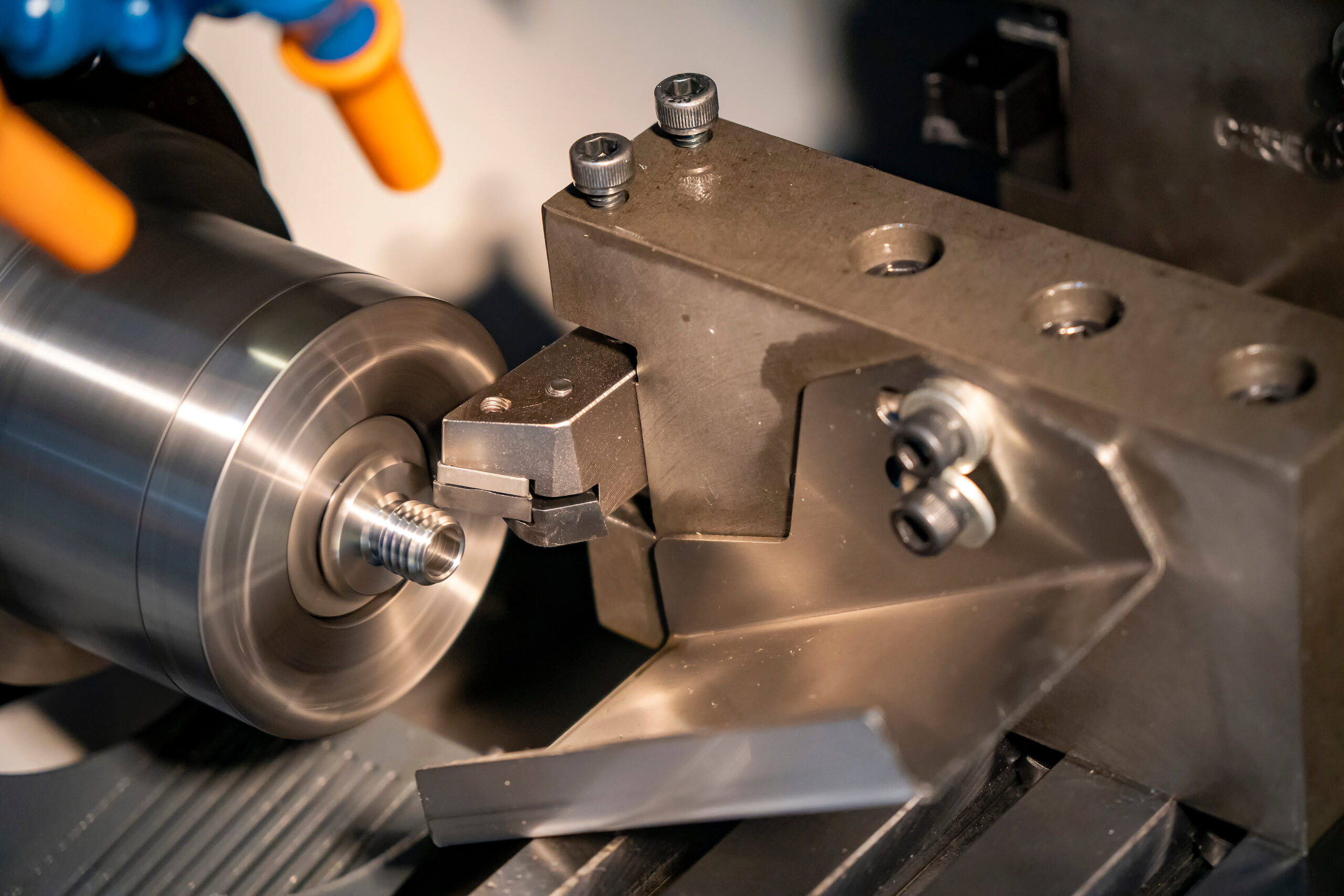
Production can be scaled using automation so that more components are built in a set period. While quicker throughput means more parts can be produced faster, speed isn’t the only improvement automation brings. Production quality also improves with the use of automated systems beyond the idea of simple quality control. CNC machining processes are known for their precision, especially with 5-axis CNC machines that can make parts with the tightest of tolerances quickly and accurately.
Modern machining software helps augment component quality by:
- Better controlling tool paths to increase efficiency while also leading to less tooling wear.
- Calculating machining parameters from metrological data collected over time to improve precision in machining processes.
- Monitoring and predicting tool wear through tool imaging and analysis of factors like depth of cuts, feed rates, forces applied, and spindle speeds.
- Optimizing processing parameters to enhance part quality by predicting the workpiece’s surface roughness and deformation.
- Predicting machining parameters such as the age of the tool, the force used for cutting, and surface roughness to determine inputs like feed rates, depth of cuts, and cutting speed.
For product manufacturers who choose to contract out machining work to third parties, it’s important to choose a partner with experience. While a contract manufacturer must have the right automation, producing precision parts relies on that manufacturer’s expertise. Though automated facilities require fewer workers, their staff must have sufficient expertise to work with these complex machines to produce parts of the desired quality.
Overall Efficiency
Automation augments the efficiency of CNC machining. Production scaling increases costs like raw materials and labor, which comprise most of the costs involved in producing parts. As previously mentioned, automation helps mitigate waste while improving both quality and speed of fabrication, which are important when a parts manufacturer wants to scale up production. Automation is the key to overall efficiency in modern machine shops, as automated equipment performs tasks quicker and more efficiently than people, increasing output while reducing production times.
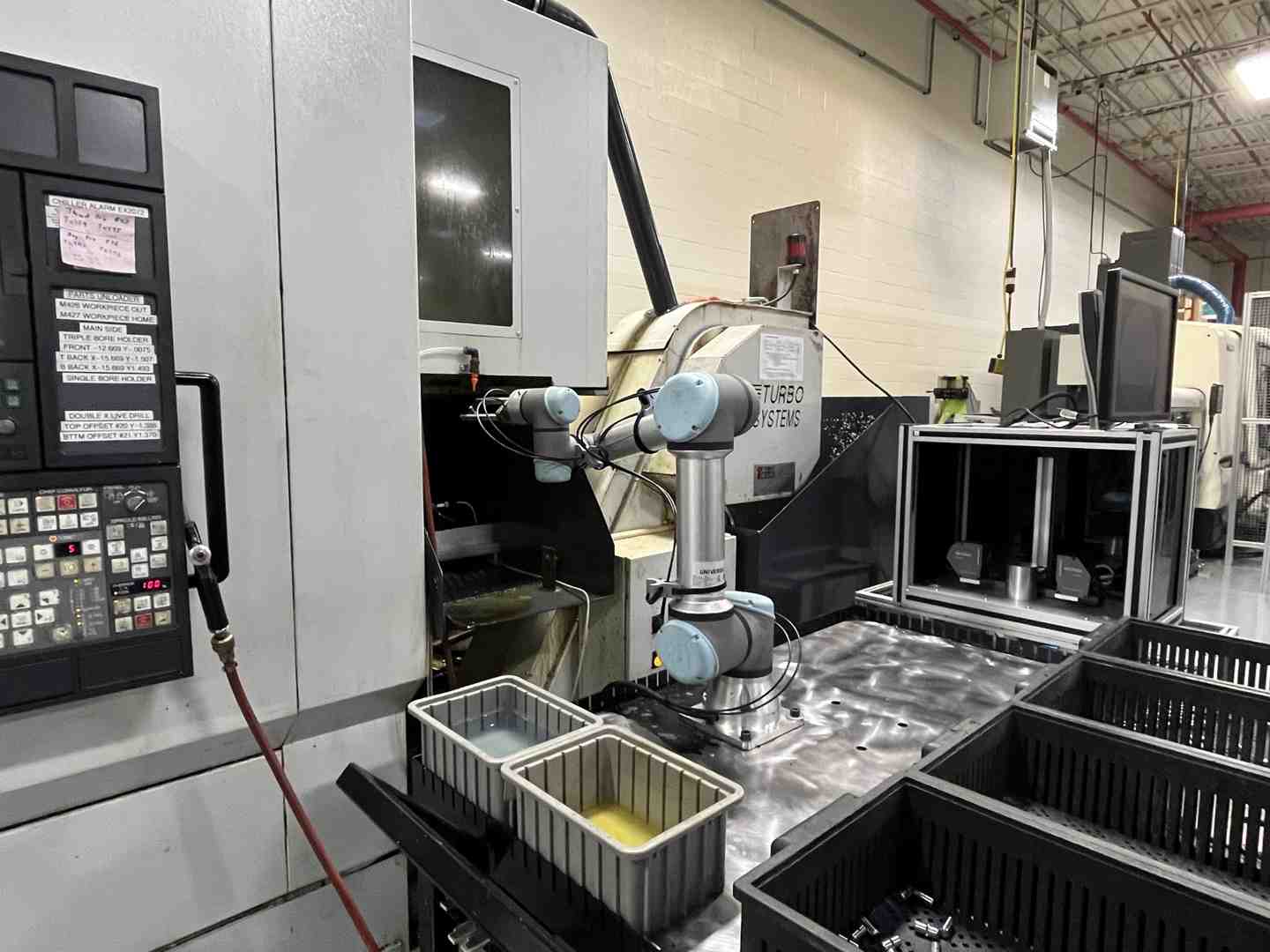
Labor is one area in which automation can improve efficiency while reducing costs. Solutions like robots and cobots (robots that can work safely alongside human workers) can lower the overall labor cost involved in parts fabrication by automating tasks. Using automation, production with CNC technology helps streamline all process elements. Automation helps machine shops scale more easily to meet customer needs by allowing programmed production overnight and on weekends and holidays. This exponentially expands the amount of work a machine shop can produce without hiring extra staff.
With such a tight labor market in the United States and no foreseeable end to this labor shortage, automated machine shops are well-positioned in the parts manufacturing marketplace. With the efficiency brought by automation, production won’t suffer nearly as much from turnover caused by workers leaving for other employment opportunities. Training costs will also be lower, as fewer workers need training.
However, efficiency goes beyond labor or materials, though these are the chief expenses for component manufacturers. Beyond production, automation can benefit a company’s logistics as well. While production quality is extremely important, getting parts to customers expediently is just as important. For manufacturers looking to scale their operations, logistical concerns are paramount, as products can’t be built without parts. A digital technology known as blockchain aids with managing inventory, allowing companies to track shipped components at points along the supply chain easily. For this reason, a manufacturer looking to scale up parts production should ensure that any machine shop with whom they partner has solid logistical support.
In tandem with logistics, robust and responsive customer service is needed. Delayed orders cause problems for any manufacturer, but these can be exacerbated by poor customer service. Customer service can be further enhanced through automation. Production is the core capacity of any machine shop, but it’s integral that concerns be addressed expeditiously. Scaling makes customer service challenging, but AI has become ubiquitous on company websites, responding to customer questions and easing the burden on customer service representatives. Automated parts ordering and checking if components are in stock in real-time also benefit customers.
Automation aids efficiency throughout the production process and even beyond it, enabling quicker processing of orders and management of inventories. Efficiency benefits the customers they serve and positions a company for smoother growth. Technology helps companies scale, whether it’s their own or that of their partners. Optimization of production processes through reducing waste, promoting quality parts, and ensuring an efficient supply chain are three keys that can help manufacturers scale up their operations while also giving them an edge over their competition.
Staub Automation in the Production of Parts
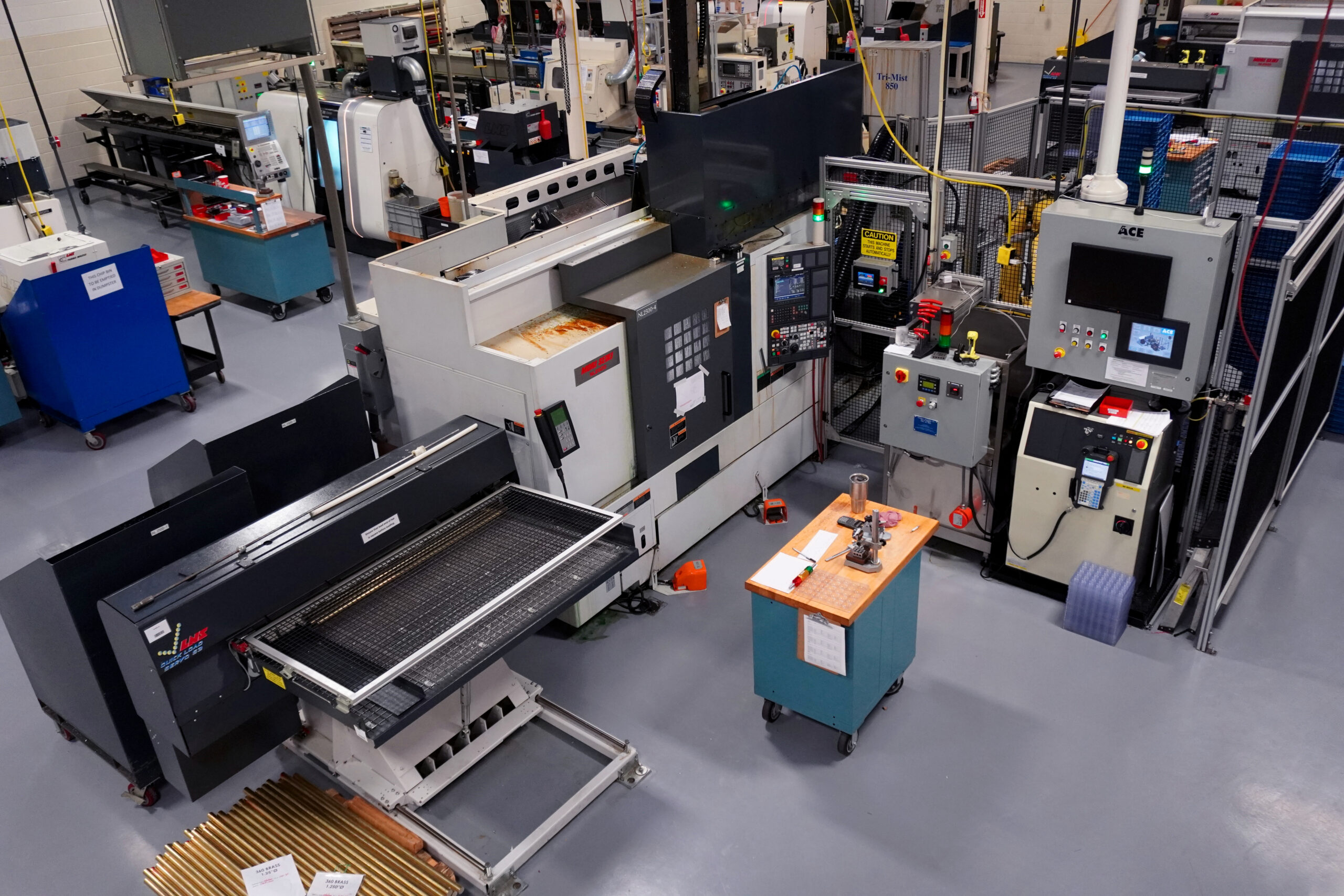
Since the 1980s, Staub Precision Machine Inc. has steadily adopted automation in its production. Sometimes referred to as smart machining by manufacturers, the use of automation in every stage of production is coming to fruition. Production challenges associated with scaling are easier to handle with Staub’s automated systems, and we have the data to prove it. Staub has pursued the idea of lights-out manufacturing since before it was a catchphrase. Today, we take great pride in our ability to produce precision parts successfully without the need for onsite workers. To learn more about our automated capabilities, contact the CNC machining experts at Staub.
Last updated on June 9th, 2025 at 02:29 pm